I am a writer, educator, and lifelong seeker, drawn to the places where story, memory, and lived experience intersect. My work explores lineage, belonging, loss, and return—how the personal is shaped by history, and how the past continues to speak through us.
Alongside my creative work, I bring decades of experience in higher education, where I’ve focused on bridging the space between academic learning and the real world. I write to make meaning of what we carry—across cultures, across generations, across the quiet thresholds of change.
This site is a space for reflection, story, and inquiry—an invitation to walk alongside me as I explore newer paradigms, perspectives, and possibilities.
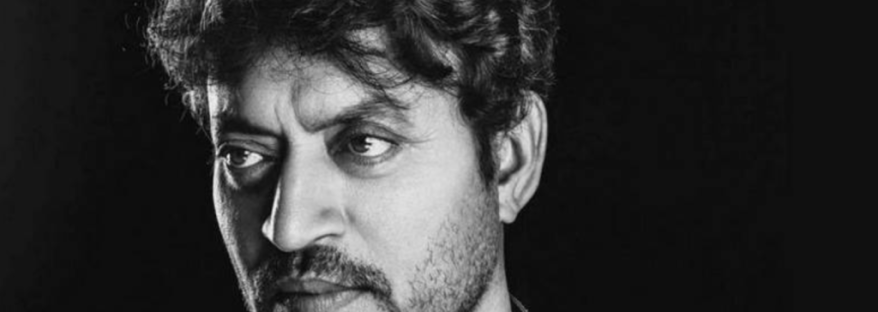
Gone too early, and left many an impression on those who saw his work. Irfan Khan was anything but a contemporary Bollywood actor. His brazen looks, the intensity of his acting, and somewhat uncouth ways of being in roles made him a memorable and charming personality on screen, and someone you could enjoy being around in real life too.
He never projected a larger-than-life image of his characters but instead delved deep into the complexity of what his character was all about, relying on more than just looks and words. His short-span acting career is a testament to the versatile roles he could play. Even in poorly produced movies, he stood out in the characters he played.
At a time when Bollywood cinema is sliding down the scale of quality acting and suitable roles for talented actors, Irfan Khan immersed himself in the characters with a jolt of freshness and realism that isn’t common anymore. He was far more capable as an artist than the roles he got. The lack of imagination, in his case, was not in him but in those who cast him in menial roles. Nevertheless, Irfan Khan was able to gain international acclaim for his acting in later years.
Irfan Khan will always be recognized as an actor who embraced the simplicity of acting with grace and went beyond mere dialogues to capture the hearts of millions who saw him imbibe those roles. He was an artist who was true to his characters. He was both likable and relatable, breaking through the barrier of the screen to connect with others. Irfan, you shall be missed forever.
How can this not inspire anyone to keep moving on regardless of where one has been. Nothing is as precious as the gift of this life, and no one should take it for granted. My own story is a bit like yours but not as daunting. It was the last day of January in 2016, a beautiful Sunday afternoon when we were returning home from San Cruz.
The vastness of the sublime Pacific Ocean to my left and the uninterrupted view of a long and windy Hwy 1 road hugging the headlands along this coastline was nothing short of a Hollywood movie scene. But as we neared a more straight section of the way, I spotted a car waiting at the stop sign, perhaps to cross over to the road on the other side of this Hwy, and another vehicle stopped at the right side of the road signaling to get on to the Hwy. It would have been an uneventful day if the driver waiting on the left side of the road had just waited his turn to cross the Hwy. But something in him must have snapped because just as our vehicle approach this crossroad, he decided to pump the gas to try to make it across the road in a dash. Unfortunately, he came start for us, t-boning his car into ours and the whole impact swirling the two vehicles around and hitting the guy waiting on the right side of the road to get onto the Hwy.
None of us were getting far that day. We were in a significant Hwy accident, and I was rushed to the nearest hospital in an ambulance. The Hwy was shut down for at least a couple of hours. The guy who hit us had to be rescued out of his car with the ‘jaws of life’ equipment and airlifted to hospital, and the local news channels broadcasted this accident. I remember the moment of the impact like it was yesterday. I knew we were going to get hit by this car, and at a crazy fast speed, but we were helpless to do anything about it. A split moment of realization that my family or I might die, but I didn’t want this to happen. I remember telling myself repeatedly, “Not this way, not now.”
I was days away from defending my dissertation for my Ph.D. and completing a long journey of earning my degree when this accident happened. I was unable to do much of anything the rest of that quarter, but having come out of this accident alive gave me so much more resolve than I thought I had. The accident fundamentally changed how I was viewing my career and my goals in life, and it breathed new life into what I saw was meaningful to me. I have spent the last five years in higher education, helping educators and administrators improve the quality and effectiveness of different programs to serve the learning needs of all students. But what has become more evident to me than ever before is that not everyone in education seems interested or even capable of doing the right things. There’s too much emphasis on politics and power play that what would seem to be the best practices are often ignored for other reasons. What I cannot ignore anymore is the lack of commitment and consistency in how we set up systems within our organizations that put the best people in charge of making the improvements we need. It’s like the coronavirus pandemic; every nation invested too much elsewhere but in prevention. I see myself as part of the change many of us are seeking: to pause and think about what we’re doing and how we are serving or not serving others through our work. I may never be in a position of authority in higher education. Still, I know I now have an influential role in contributing to the improvement and well being of how we transition diverse students through higher education. And this is my story of how I found my grit and resilience to challenge the established status-quo everywhere.
Although I’ve spend a large part of my career in higher education, I’m very interested in exploring how similar or different things are in other industries in terms of hiring new talent, onboarding processes, as well as designing, developing, and evaluating new and existing programs!
The coronavirus pandemic is our opportunity to look at what we do from newer perspectives and I want to use this time to explore topics that bring our organizations and people together. Remember, we’re in this together!
Anyone who has given their fair share of interviews and read a plethora of information available in online blogs, articles, and videos knows how debilitating and disconcerting the whole process can be.
While my career trajectory shows increasingly responsible roles, I have experienced a fair amount of inconsistencies in the hiring practices in higher education. I have focused my entire career on developing skills and experience that would make me an asset to an organization, and I believe in “going the distance” with an organization. But I have not had that type of luck.
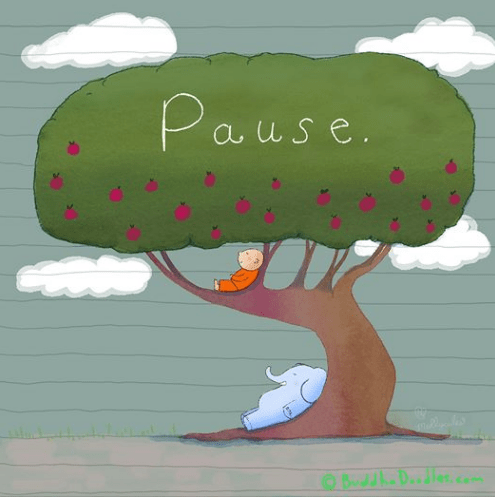
I’ve interviewed for jobs that I knew I was well-qualified for and could add value. Still, many of those opportunities didn’t go any further than the final interview. From being told by the hiring managers point-blank that although I’m well-prepared, I’m not the only candidate or asking me to notify my professional references, but they never called. The coronavirus pandemic, also known as COVID19, and the ensuing lockdown, should cause everyone to pause and think. Pause and think about what roles and relationships do we bring to play at work.
Think about how we look for new talent. Think about how we address our implicit and explicit biases in hiring practices. And how do we know someone is the best fit for an organization based on our conventional hiring practices, especially in times of agonizing disruption and uncertainty.
The coronavirus pandemic has been nothing less than the proportion of a storm that has disrupted the very fabric of what we previously saw as usual and ordinary. But let me first go back to what has been my most common experience in the domain of interviewing, to receive a generic email from human resources regardless of the job I applied. It would state something along the lines of ‘thank you, but no thank you.’ And the explanation would unabashedly be the same: how strong the pool of candidates was and how difficult the decision was for each selection and subsequent rejection.
But research shows that when interviewing, we decide whether we like, trust, or want to work with someone within 20 seconds of meeting them. According to Vanessa Van Edwards, a behavioral investigator, all you have to do is master those 20 first seconds to create great first impressions and landing the job. Similarly, researchers at Tufts University have found that whether we like it or not, everyone makes a snap judgment when we see someone.
My interviewing experiences have taught me that HOW people hire is very critical to WHO they end up hiring. If hiring committees are ill-prepared to ask the right questions and are unaware of their shortcomings in teams, programs, and processes, how will they hire the right person for a job? Research shows that 75% of workers experience a high degree of stress in the workplace.
We’re now living in a state of the coronavirus pandemic, and nothing will be the same as before. This state of being is by no means a temporary disruption, but a slow-moving permanent change in how we will think, work, engage others, build relationships, and how will we hire and bring new people into our organizations and lives.
Whether we like it or not, we are now in uncharted territory. It is hard for anyone to predict what skills we will most need in our organizations to forge ahead, except this is the start of an entirely new way of thinking – a reset in how we hire and who we hire.
The coronavirus pandemic crisis has shown us that it is a global phenomenon. While the United States has enormous resources at its disposal, it is a matter of organizations getting better organized and building on its social capital to stay ahead of the curve.
It is no longer just about the ‘bottom line’ but the ‘bottom-up’ approaches that will define our collective progress and resilience. How well we hold ourselves in personal and professional settings will be a matter of how effectively we can adapt to the changes that are shaping this new reality of working remotely and social distancing.
As we move further in the age of knowledge and information, social distancing will be more about how we develop more creative ways to live, work, and forge relationships, not limit them. As we take this time to stay home and work/study from home, we must grapple with the enormity of the post-coronavirus era.
Nobody wants to go back to the nuances of office politics, a toxic work environment, crummy culture, and the accompanying stress that we might have endured at some point in our work. It is now time to pause and think about how we want this new normalcy to look.
One of the most extensive public opinion surveys was conducted globally in 1999 by Toronto-based Environics International Ltd., interviewing 25,000 average citizens in twenty-three countries. The results showed that two out of three want companies to go beyond their traditional role of making a profit, hiring people, and obeying the laws, to also contributing to the broader social goals. How the coronavirus pandemic will change us only time will tell. But it is undoubtedly a time for a reset.
A reset in how we think, behave, and treat others. A reset in what our priorities are, and a reset in how we hire other people into our organizations. This ‘time out’ is a rare chance for us to think about what kind of a world we want to help shape for ourselves and our future generations.
It is time for us to pause and think. It is time for a reset.
Although I’ve spend a large part of my career in higher education, I’m very interested in exploring how similar or different things are in other industries in terms of finding and hiring new talent, onboarding processes, as well as designing, developing, and evaluating new and existing programs!
I am a creative thinker, educator, and a higher education professional with over 10 years of experience in the California community college system. I have worked in a variety of roles, both in student services and instruction, serving the learning needs of a diverse student population and engaging college stakeholders to improve the effectiveness of programs and services for student success and organizational effectiveness. My primary area of expertise is in learning and development, outcomes assessment and evaluation, equity and diversity, accreditation and compliance, program review, and program and organizational effectiveness.
I earned my master’s degree in Public Administration from Panjab University in Chandigarh, India and a Ph.D. in Education with specialization in Higher Education Leadership and Administration from Walden University in Minneapolis, MN.
In my free time, I love to write, paint, sketch, and cook mouth-watering foods that draw me to them.



 Ruby's Musings