I am a writer, educator, and lifelong seeker, drawn to the places where story, memory, and lived experience intersect. My work explores lineage, belonging, loss, and return—how the personal is shaped by history, and how the past continues to speak through us.
Alongside my creative work, I bring decades of experience in higher education, where I’ve focused on bridging the space between academic learning and the real world. I write to make meaning of what we carry—across cultures, across generations, across the quiet thresholds of change.
This site is a space for reflection, story, and inquiry—an invitation to walk alongside me as I explore newer paradigms, perspectives, and possibilities.
Doing the same thing repeatedly and expecting different results is a definition of insanity. That is what is happening with the circus of elections every few years.
It is well known that most political parties make false promises around the turn of the elections, but their corrupt fervor is ruthless once in power. The Congress party has ruled in my ancestral village, Guruharsahai (Punjab, India), because they won the last four elections; in other words, they have ruled for the previous 20 years. I use the word “ruled” instead of “served” intentionally because if you take a quick look at my village and its surrounding areas, it is easy to comprehend the complete disarray and dysfunction the area is undergoing.
There is a lack of public water system; the roads resemble the craters of the moon, there is zero effort to provide general healthcare despite a looming pandemic, some of the streets and sewage system was quickly built in such a huff only recently that they will not withstand the first monsoons to hit the region in the next few months. Not to mention the state of the local public schools built only recently in hurried and haphazard construction to showcase some progress by the Congress party. But it does little to make safe and healthy school buildings and environment for the children.
Perhaps the biggest challenge and setback to my village has been the widespread introduction and sale of a lethal drug called the Chitta (such as Fentanyl and opioids).
The business of drugs is the most sophisticated operation being conducted as it is among the largest cash-crop for the area. What’s mind-blowing is that its rapid use and continuous flow are under the direction and supervision of the political leaders, their accomplices, and the police. They were elected and hired to protect our communities from such substance abuse, but they are the biggest reason for the downfall of my village.
That is the situation of my village after 72 years of India’s independence. Winston Churchill rightly predicted the so-called political “leaders” as independent India’s ‘thugs’ and ‘scoundrels.’ They have managed to reduce my village into a depressed economy with high unemployment and drug overdose rates.
This madness must stop now! We need to end the election circus that leads to no real change and improvement. We need a better vision and plan for my village and Punjab. When you vote on February 20, you’re not just voting for a political party; you’re voting for a future that is either the same old sad reality or a new beginning for change and improvement.
Think hard before you support a candidate and cast your vote because their record speaks more than their empty and meaningless words. Start with electing politicians who have the history and credibility to make a positive change.
To bring change, we must begin to admit what is wrong and do right. I’m doing my part, are you?
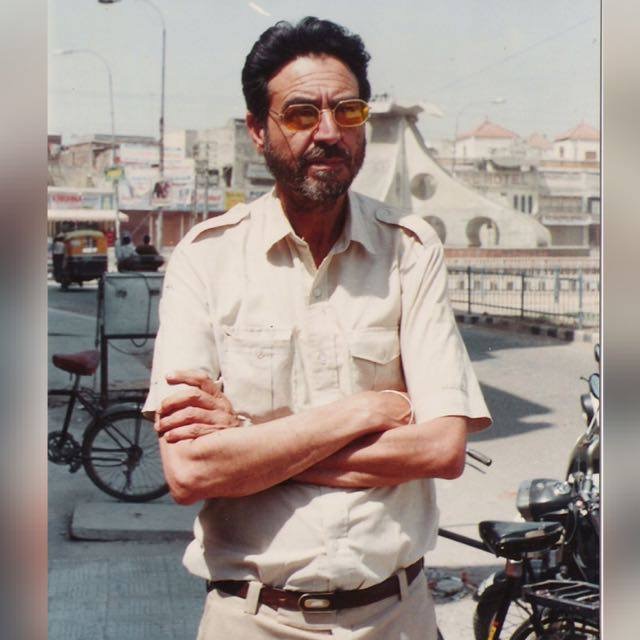
He was a man for all ages, futuristic, leader, community organizer, music lover, and he was also my father. He was the perfect blend of someone with a global mindset with ancient values inheritance. He taught me how to lead with inner strength, fortitude, and righteousness. He guided me through the ways of life in a world (India) that is starkly different and often rumbustiously chaotic from the one I live in now (USA). But he never faltered when things got tough. My dad was the kind any girl would be proud of because, in a world where men ruled and treated women as second-class citizens, he made not just one but all three of his daughters inside out strong, empathetic, surefooted, and self-reliant.
I remember when my father became the Sarpanch, the head of a local government council of 22 villages, how many people from neighboring villages poured in regularly to seek justice. The gatherings were often enormous, loud, and noisy, and the disputes ranged from family squabbles to business and political issues. Even at a tender age, I could see the leadership, strength of character, and utmost compassion my father demonstrated in his observations and rulings. He was indeed a reverend father figure of the area, and he never lost sight of doing what’s best for the local communities.
I also remember when he put the government funds to good causes, built new roads, set up electricity poles and power around the village. Such work was the first, and the only time a politician had done to benefit the community without ulterior motives. You see, my father saw his role as being able to serve the people and give back the power to improve people’s living conditions. Unfortunately, the current day situation in those villages is a far cry from this history. As I reflect on my father’s contributions, I am humbly reminded that what he could do (even at the most basic level of government – the Sarpanch) no other politician has ever since done for the overall wellbeing and development of these villages. Indeed, it is never the position that one holds that begets the best work, but the power of one’s intentions will make all the difference in the world for just themself or everyone.
Imagine for a moment, if all the politicians thought and acted like my father did, how different India would have been today. But the large majority of politicians, from the lowest to the highest level, are more busy amassing their personal wealth and real estate than doing what people voted them for them to do. Our politicians are the single biggest reason why India lagged behind China when the two nations were on an equal footing about 20 years ago. So what happened? The answer is in what didn’t happen. China was able to curb its corruption at every single level of its system of organization and governance. But India is riddled in a never-ending vicious cycle of egregious corruption from the bottoms up. That’s why we are far away from any real progress or nobility of work under the current political environment. But I am ever so humbled to recognize that my father could do and accomplish so much for his community given the short time he had.
As Maya Angelo said, “At the end of the day, people won’t remember what you said or did, they will remember how you made them feel.” That’s how my father’s name now lives on in the hearts and minds of people he touched.
Yes, my father was one of those people who give more than they take away. He lifted people out of nothingness; he helped them develop confidence; he helped them build and grow their lives and careers. He could do all this and much more mainly because of his family’s long-standing history and legacy. You see, my father was raised at a time of abundance and opulence but with a higher consciousness of being a contributing member of society, a philanthropist, and an architect for a better tomorrow for everyone. His name will go down in history as being able to carry forth the legacy of what his family stood for: improving the social and economic conditions of entire communities and promoting universal brotherhood. And I remember him fondly on this day, the day he died, as someone who taught me how to be of service to others, holding my head high, fighting for justice and equality for all, and navigating this exponentially changing world with a strong moral compass.
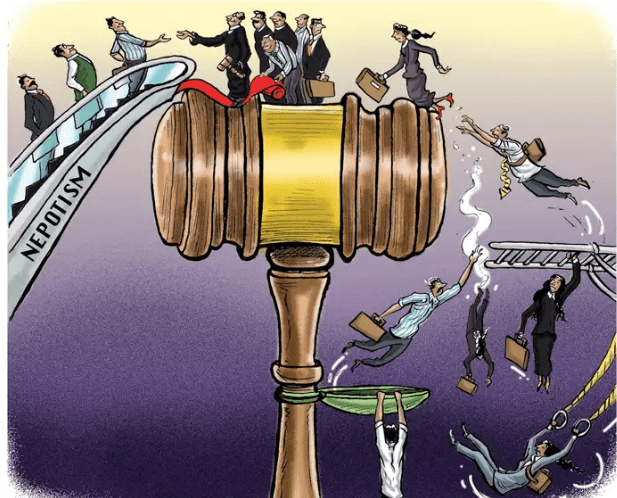
The word nepotism is the practice among the powerful, influential, and wealthy individuals in favoring relatives and friends, especially by giving them jobs or contracts or other ways to provide them with monetary favors. It should not be a surprise when someone gives their nephew a job as a Sales Clerk at their clothing showroom. But it should be of concern when persons in positions of higher authority in public and private jobs place their favorite persons who are far less competent in an area that requires a combination of higher learning, training, and skill. Nepotism can also mean providing special privileges to friends, relatives, colleagues, or acquaintances for employment, career, or other financial decisions. While nepotism exists in every culture and society, it is a highly sensitive issue. In this article, I focus on two industries, US higher education, and Bollywood in India and their indistinguishable struggles with nepotism.
The US higher education ranked #1 in the world several decades ago, but as of 2019, the US ranks at an unimpressive #36th. While the US higher education is an excellent education system and is unique in some ways, its ranking has been steadily slipping down because of several challenges that colleges and universities face. Some of those challenges haven’t fully unearthed. I have spent the last twenty years of my professional career in the US higher education, and I have seen my fair share of a significant challenge facing the educational organizations of all sizes – Nepotism at different levels of an organization.
I have witnessed first-hand how nepotism can take root at one level of the organization (usually at the top tier of the administration) and spread like wildfire throughout the organization. It almost feels like a musical chair game; once the music starts (typically when a new leader joins an organization), everyone must quickly take sides and join the circus of nepotism and cronyism, or be singled out. Given how the educational organizations function, no one can hide their true allegiance or alliance. Nepotism has a momentum and a life of its own. The favors are often in the forms of a promotion, reorganization, or adding more departments/programs under the favored person’s supervision—bottom line: More money in their pockets.
The Real Bollywood
Let’s take a look at Bollywood, the entertainment hub for India’s 1.3 billion population. Not only is the name Bollywood an imitation of Hollywood, but it’s makeup is similar to what goes on in Hollywood. Most newcomer actors in Bollywood are forced into signing up for low-cost, mediocre roles until they can prove their likability by the audience. Women are even susceptible to sexual harassment, non-consensual sex, and rape by the industry toughies. Think about Harvey Weinstein’s decades of sexual abuse in the US entertainment industry that has only come to light in recent months.
Bollywood has a notorious reputation for giving a red carpet welcome and treatment to the kids of Bollywood stars, known as star kids. Regardless of the majority of star kids’ ineptitude and awkwardness at acting, they get the leading roles in movies while making it harder for ‘outsider,’ actors who have no links to Bollywood celebrities to get the right parts in films. In many instances, the Bollywood establishment makes it difficult for lesser-known but highly talented artists to reach the peak of their performance and career. Rumor has it that the industry establishment has an ‘elite club of Bollywood’ that willfully scrutinizes and antagonizes any ‘outsider’ and works closely to ensure anyone on their blacklist doesn’t last too long in that profession.
Once nepotism manifests itself in an organization or an industry, it can quickly build up the momentum for cronyism, mediocrity, low morale, and poor values that are hard to break away. While nepotism is prevalent in every industry, most people are fearful of speaking about it, perhaps for fear of retaliation, and fear of being singled out, or simply because they have ties of kinship with those who practice nepotism. Avoiding such a conflict may seem to be a safe bet, even at lower motivation, work satisfaction, and work commitment.
Sushant Singh Rajput
Sushant Singh Rajput was an immensely talented, intelligent, good-looking, well-liked, and a promising A-list star who recently committed suicide. The alleged bullying and oppression by the infamous ‘elite club of Bollywood’ unquestionably wanted Sushant Singh Rajput out of the film industry. The social media sites in India are abuzz with a litany of complaints, testaments, and petitions to investigate what drove this fine young actor to kill himself and who all were behind this desperate attempt to limit his potential. One clue that recently came to light was a distinctly offensive and disdainful twitter remark. It was an attempt to publicly bash Sushant Singh Rajput by banning him from getting any future roles in movie productions in Bollywood. The unashamed culprits behind this ill-willed tweet were none other than some of the most famous Bollywood movie personalities and production companies. These include Salman Khan Films, Sajid Nadiawala, T Series, Yash Raj Films, Balaji Motion Pictures, and many others. Sushant Singh Rajput’s decision to commit suicide and not leave a suicide note is not an act of cowardice but silent indignation toward Bollywood elites who made it impossible for him to carve his way out of an outcasted position they held out for him. The ordinary people understand Sushant’s silent resentment, but in Bollywood it is a deafening silence.
Nepotism in Bollywood
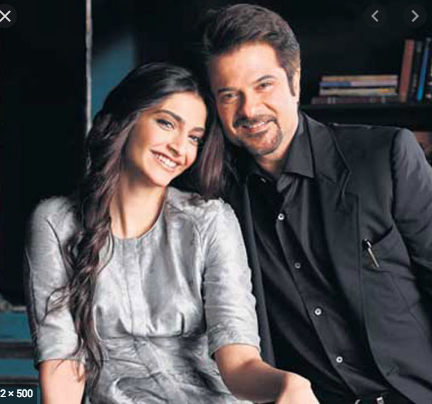
So how does the practice of nepotism work in Bollywood? The Bollywood star kids are the sons and daughters of famous Bollywood personalities. Star kids like Alia Bhatt, Abhishek Bachchan, Sonam Kapoor, Karan Johar, Sara Ali Khan, Jhanvi Kapoor, and many more have been a shoo-in for leading roles in movies from the getgo of their careers. But what has been most forthcoming about their performances is a vain sense of privilege, power, elitism, and arrogance that outdoes their acting debuts. Most star kids emanate an ostentatious loftiness of acting being ‘in their genes.’ Still, nothing can be farther from the truth because most of them have failed miserably to impress the audience, despite their star-studded newcomer allure because of their visibly inept and mediocre skills in acting. For now, many of these star kids continue to ride the ebb tide of their parents’ popularity, hoping that something about them will stick as unique or palatable in the hearts of the audience.
The media is primarily to blame for overlooking the lackluster talent that exists in most star kids but making them look like larger-than-life individuals who are projected as having the best shot for success. The media is irrefutable and unabashed in writing about what cool new things the star kids have acquired, what party they attended, what designer clothes they are wearing, where they shop, and so on. For most of these star kids, the media hounds for their next story long before they even decide to join the film industry.
A Few Brave Hearts Including Kangana Ranuat
However, few brave reporters have time and again asked various Bollywood stars in different venues about the problem of nepotism. Almost all the celebrities interviewed for this question have carefully avoided answering the real question while crafting a cheeky, smirky, and often belittling remarks to the reporters for asking such an absurd question, or making light of the whole issue. In some cases, they have shown themselves to be oblivious to any nepotism triggers or ruled out that nepotism exists. Bollywood industry employs roughly 20,000 actors each year. Only one actor has steadfastly raised the issue of nepotism in this industry thus far – Kangana Ranuat. Kangana Ranuat is herself an ‘outsider,’ She is brave to bring the issue of nepotism to the forefront of her acting career in Bollywood. She was also the first to release a public statement about nepotism and its connection to Sushant Singh Rajput’s death.
The Infamous ‘Elite Club of Bollywood’
While we don’t yet fully know what drove Sushant to the point of his ultimate sacrifice, there is no doubt that his death has stirred up a national conversation about nepotism and how difficult it is for ‘outsider’ actors to fit in. A few more Bollywood stars have come forward to address the long-standing and systemic issue of nepotism in Bollywood. Sushant’s death has also reignited the conversation about the controversial ‘elite club of Bollywood’ inner workings, and now the Mumbai police are investigating all leads and allegations in this case.
In the hallowed halls of US higher education and Bollywood, nepotism and cronyism are alive and thriving. While not everyone would take the extreme step to commits suicide because of the prevalence of nepotism, it can dramatically change the career trajectory, aspiration, and motivation of those negatively affected by nepotism. Nepotism may vary in range and scale, but it is as rampant as inequity and inequality in US higher education and being a ‘star kid’ versus an ‘outsider’ in Bollywood. The veil of nepotism is thin, but its reach is more profound than what meets the eye, and what the heart can feel. It is like a virus that starts slowly, but once it finds a host, the spread is far and deep. As an educator, I want to understand nepotism, not just in terms of what it stands for but also where it can eventually lead an individual, group, class, society, and nation. Next time you find someone choosing to defend, deny, or minimize that nepotism exists, help them first consider the following observations:
It’s about dominance, discrimination, and oppression – The height of nepotism can be seen in the most soul-crushing example of the Nazi era Germany when millions of Jews were killed in the concentration camps. Nepotism allowed Hitler to have tens of thousands of officers and soldiers to conform to his way of thinking and join him in the vicious act of killing innocent people. While this is an extreme example, it highlights how far out nepotism can go if it goes unchecked. At the most basic level, nepotism is about dominating others based on someone’s position, power, status, or class and ensures that others don’t reach a higher level of accomplishment in life. It also means using subtle or overt forms of discrimination to put others down because someone doesn’t fit your version of being worthy or equal. Oppression is a prolonged cruel, and unjust treatment of others to control and succumb them to mental pressure, pain, and distress. In each episode of Koffey with Karan, an Indian talk show produced, directed, and hosted by Karan Johar, he aimed to embarrass and humiliate Sushant Singh Rajput by asking his guests (typically the A-list actors and star kids) to rate Sushant.
Competency and likability – In every industry, talent and competence should have the highest value, but it doesn’t always happen. While it may be harder to recognize someone’s expertise in education because the person may not be in a position or title for others to witness their core abilities and aptitude, in film acting, you either have the talent to act or don’t. It’s that simple. Irrespective of a person’s experience and background, the natural talent in acting is unmistakable and noticeable. But to deliberately squash someone gifted and talented in acting because of nepotism is a tough bullet for anyone to bite. Sushant Singh Rajput must have felt extreme hopelessness and desperation to recognize that his competency, talent, likability, intelligence, including many other virtues, weren’t sufficient for the Bollywood elites to make space for him in an industry that launches about 2,000 films each year.
Perceptions of unfairness – Perhaps the biggest downside of the practice of nepotism is the perception of unfairness. When the rules are dictated by ‘who knows who’ and not ‘who knows what’ because it comes from a place of privilege and entitlement, there is an underlying disillusionment and hopelessness of ‘how does it matter’ to have real talent or ability to do an excellent job. Pick any latest Hindi movie at random and watch a slurry of mediocre acting that runs through its script. The low morale also breeds an unhealthy competition every time Bollywood elites pick a star kid with little to no talent in acting for a leading role in a movie, thereby promoting nepotism. What matters is who will make the most profit and who all should benefit from that endeavor.
Complacency and inefficiency – When almost everyone is complacent about an egregious problem such as nepotism, it breeds inefficiency and complacency with how things are and not how they should be. There is little to nothing to learn, grow, and advance because, just like in the musical chairs game, everyone has already taken sides, and each one must cease to change the status quo. This way of functioning in any organization or industry is nothing less than sabotaging its future for a select few at the cost of progressive evolution and transformation. Casting the net too shallow scoops the weakest fish into the net.
The moral dilemma – What the practice of nepotism essentially brings into question and is at the root of our collective existence is the value each one of us brings to the table. To allow a mediocre and unfit person to be in a lead role, whether in an organization or a movie, is an insult to injury to those who are far more competent and deserving. An ‘outsider’ simply does not have the clout a ‘star kid’ or a favored person holds. The moral dilemma is for those in positions of authority. They have to give up on their ideals and values that bring out the best in ourselves and others and settle for people who lack both the competency and aptitude to contribute meaningfully to an organization or industry. I would rather watch five quality movies with great acting per year rather than to subject myself to a plethora of substandard and ridiculous movies with an overtone of mediocre acting.
Regardless of the industry, people with great talent and competency have a considerable share in building the wealth, prosperity, and well-being of a nation. It is the ethical responsibility of leaders in every field to recognize and promote real talent and ensure that the abundance and dedication of highly talented individuals are positively channeled and broadly realized. It would not be far-fetched for the policymakers to consider an anti-nepotism law that brings back increased transparency and accountability into our work world. As we step into the second half of 2020, let’s make a resolution to stand up to the evils of nepotism not just for ourselves but also for others and to always choose love, compassion, and kindness over anything negative.
I remember the day I found out that my grandfather had passed away. Channi, our longtime driver/cook/handyman/and the father of our early childhood best friends, had picked up my two sisters and me after school, and instead of going straight home as on other days, we went to see a movie in the theatre. Of course, we were delighted. What we didn’t know just then was why the movie? And I’ll never forget the movie we got to see that day – Sholay. The film was one of the best Indian movies, and I’ll always remember watching it with so much excitement all the way through and until we returned home. We found out that our grandfather had passed away that morning. That explained going to the theatre instead of the home after school. The house had been turned into a makeshift mourning place for relatives and well-wishers to see him one last time. This was no place for us 5-7-year-old kids, and understandably we were shuffled off to our aunt’s home for the next few days.
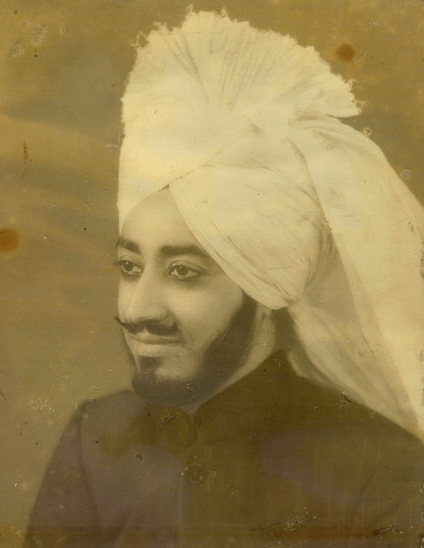
Tikka Atamjit Singh Sodhi, or Dadaji as we three sisters called him, had lived a life full of abundance and eminence. He came from an era of a very different India than we grew up in; before the nation became independent from British rule and divided into India and Pakistan. Growing up, I had only heard snippets of how life was for Dadaji and the Sodhi family ‘before the divide,’ and it was evident that so much had changed within the last three generations of our family that it was incomprehensible to articulate those distinctions.
But still, my earliest memories of Dadaji were full of quiet regality and repose. His indulgences were many, but above all, he loved to cook and eat good food. He never let go of an opportunity to hunt for an excellent next meal, and he was considered one of the best shooters and hunters in the region. A distinct practice in his hunting excursions was that he never aimed at an animal or bird without giving it a fair chance to escape from its predator.
Tikka Atamjit Singh Sodhi hailed from one of the chiefs and notable families of Punjab whose prominence and stature was well-documented in the historical legacy of the empire of Maharaja Ranjit Singh and later in the archival records of the British Raj. Tikka Atamjit Singh Sodhi was the direct descendent of Guru Ram Das (Sodhi), the fourth Sikh Guru from Guru Nanak Dev Ji (Bedi), the founder of the Sikh religion. Equally notable was the family he was married into, my paternal grandmother, Rani Jasjit Kaur was the great-granddaughter of Sir Baba Khem Singh Bedi, the direct descendent of Guru Nanak Dev Ji (Bedi) and a cultural, social, and educational leader in the undivided part of India now in Pakistan.
Such was the grandeur and legacy that Tikka Atamjit Singh Sodhi carried along and upheld like a true statesmen in those changing times. I was very young when he passed away but I will forever be grateful to have met him and known him for the life he lived, for he instilled in us three girls the abundance of not what you have but how well you live.
Gone too early, and left many an impression on those who saw his work. Irfan Khan was anything but a contemporary Bollywood actor. His brazen looks, the intensity of his acting, and somewhat uncouth ways of being in roles made him a memorable and charming personality on screen, and someone you could enjoy being around in real life too.
He never projected a larger-than-life image of his characters but instead delved deep into the complexity of what his character was all about, relying on more than just looks and words. His short-span acting career is a testament to the versatile roles he could play. Even in poorly produced movies, he stood out in the characters he played.
At a time when Bollywood cinema is sliding down the scale of quality acting and suitable roles for talented actors, Irfan Khan immersed himself in the characters with a jolt of freshness and realism that isn’t common anymore. He was far more capable as an artist than the roles he got. The lack of imagination, in his case, was not in him but in those who cast him in menial roles. Nevertheless, Irfan Khan was able to gain international acclaim for his acting in later years.
Irfan Khan will always be recognized as an actor who embraced the simplicity of acting with grace and went beyond mere dialogues to capture the hearts of millions who saw him imbibe those roles. He was an artist who was true to his characters. He was both likable and relatable, breaking through the barrier of the screen to connect with others. Irfan, you shall be missed forever.
How can this not inspire anyone to keep moving on regardless of where one has been. Nothing is as precious as the gift of this life, and no one should take it for granted. My own story is a bit like yours but not as daunting. It was the last day of January in 2016, a beautiful Sunday afternoon when we were returning home from San Cruz.
The vastness of the sublime Pacific Ocean to my left and the uninterrupted view of a long and windy Hwy 1 road hugging the headlands along this coastline was nothing short of a Hollywood movie scene. But as we neared a more straight section of the way, I spotted a car waiting at the stop sign, perhaps to cross over to the road on the other side of this Hwy, and another vehicle stopped at the right side of the road signaling to get on to the Hwy. It would have been an uneventful day if the driver waiting on the left side of the road had just waited his turn to cross the Hwy. But something in him must have snapped because just as our vehicle approach this crossroad, he decided to pump the gas to try to make it across the road in a dash. Unfortunately, he came start for us, t-boning his car into ours and the whole impact swirling the two vehicles around and hitting the guy waiting on the right side of the road to get onto the Hwy.
None of us were getting far that day. We were in a significant Hwy accident, and I was rushed to the nearest hospital in an ambulance. The Hwy was shut down for at least a couple of hours. The guy who hit us had to be rescued out of his car with the ‘jaws of life’ equipment and airlifted to hospital, and the local news channels broadcasted this accident. I remember the moment of the impact like it was yesterday. I knew we were going to get hit by this car, and at a crazy fast speed, but we were helpless to do anything about it. A split moment of realization that my family or I might die, but I didn’t want this to happen. I remember telling myself repeatedly, “Not this way, not now.”
I was days away from defending my dissertation for my Ph.D. and completing a long journey of earning my degree when this accident happened. I was unable to do much of anything the rest of that quarter, but having come out of this accident alive gave me so much more resolve than I thought I had. The accident fundamentally changed how I was viewing my career and my goals in life, and it breathed new life into what I saw was meaningful to me. I have spent the last five years in higher education, helping educators and administrators improve the quality and effectiveness of different programs to serve the learning needs of all students. But what has become more evident to me than ever before is that not everyone in education seems interested or even capable of doing the right things. There’s too much emphasis on politics and power play that what would seem to be the best practices are often ignored for other reasons. What I cannot ignore anymore is the lack of commitment and consistency in how we set up systems within our organizations that put the best people in charge of making the improvements we need. It’s like the coronavirus pandemic; every nation invested too much elsewhere but in prevention. I see myself as part of the change many of us are seeking: to pause and think about what we’re doing and how we are serving or not serving others through our work. I may never be in a position of authority in higher education. Still, I know I now have an influential role in contributing to the improvement and well being of how we transition diverse students through higher education. And this is my story of how I found my grit and resilience to challenge the established status-quo everywhere.
Although I’ve spend a large part of my career in higher education, I’m very interested in exploring how similar or different things are in other industries in terms of hiring new talent, onboarding processes, as well as designing, developing, and evaluating new and existing programs!
The coronavirus pandemic is our opportunity to look at what we do from newer perspectives and I want to use this time to explore topics that bring our organizations and people together. Remember, we’re in this together!
Anyone who has given their fair share of interviews and read a plethora of information available in online blogs, articles, and videos knows how debilitating and disconcerting the whole process can be.
While my career trajectory shows increasingly responsible roles, I have experienced a fair amount of inconsistencies in the hiring practices in higher education. I have focused my entire career on developing skills and experience that would make me an asset to an organization, and I believe in “going the distance” with an organization. But I have not had that type of luck.
I’ve interviewed for jobs that I knew I was well-qualified for and could add value. Still, many of those opportunities didn’t go any further than the final interview. From being told by the hiring managers point-blank that although I’m well-prepared, I’m not the only candidate or asking me to notify my professional references, but they never called. The coronavirus pandemic, also known as COVID19, and the ensuing lockdown, should cause everyone to pause and think. Pause and think about what roles and relationships do we bring to play at work.
Think about how we look for new talent. Think about how we address our implicit and explicit biases in hiring practices. And how do we know someone is the best fit for an organization based on our conventional hiring practices, especially in times of agonizing disruption and uncertainty.
The coronavirus pandemic has been nothing less than the proportion of a storm that has disrupted the very fabric of what we previously saw as usual and ordinary. But let me first go back to what has been my most common experience in the domain of interviewing, to receive a generic email from human resources regardless of the job I applied. It would state something along the lines of ‘thank you, but no thank you.’ And the explanation would unabashedly be the same: how strong the pool of candidates was and how difficult the decision was for each selection and subsequent rejection.
But research shows that when interviewing, we decide whether we like, trust, or want to work with someone within 20 seconds of meeting them. According to Vanessa Van Edwards, a behavioral investigator, all you have to do is master those 20 first seconds to create great first impressions and landing the job. Similarly, researchers at Tufts University have found that whether we like it or not, everyone makes a snap judgment when we see someone.
My interviewing experiences have taught me that HOW people hire is very critical to WHO they end up hiring. If hiring committees are ill-prepared to ask the right questions and are unaware of their shortcomings in teams, programs, and processes, how will they hire the right person for a job? Research shows that 75% of workers experience a high degree of stress in the workplace.
We’re now living in a state of the coronavirus pandemic, and nothing will be the same as before. This state of being is by no means a temporary disruption, but a slow-moving permanent change in how we will think, work, engage others, build relationships, and how will we hire and bring new people into our organizations and lives.
Whether we like it or not, we are now in uncharted territory. It is hard for anyone to predict what skills we will most need in our organizations to forge ahead, except this is the start of an entirely new way of thinking – a reset in how we hire and who we hire.
The coronavirus pandemic crisis has shown us that it is a global phenomenon. While the United States has enormous resources at its disposal, it is a matter of organizations getting better organized and building on its social capital to stay ahead of the curve.
It is no longer just about the ‘bottom line’ but the ‘bottom-up’ approaches that will define our collective progress and resilience. How well we hold ourselves in personal and professional settings will be a matter of how effectively we can adapt to the changes that are shaping this new reality of working remotely and social distancing.
As we move further in the age of knowledge and information, social distancing will be more about how we develop more creative ways to live, work, and forge relationships, not limit them. As we take this time to stay home and work/study from home, we must grapple with the enormity of the post-coronavirus era.
Nobody wants to go back to the nuances of office politics, a toxic work environment, crummy culture, and the accompanying stress that we might have endured at some point in our work. It is now time to pause and think about how we want this new normalcy to look.
One of the most extensive public opinion surveys was conducted globally in 1999 by Toronto-based Environics International Ltd., interviewing 25,000 average citizens in twenty-three countries. The results showed that two out of three want companies to go beyond their traditional role of making a profit, hiring people, and obeying the laws, to also contributing to the broader social goals. How the coronavirus pandemic will change us only time will tell. But it is undoubtedly a time for a reset.
A reset in how we think, behave, and treat others. A reset in what our priorities are, and a reset in how we hire other people into our organizations. This ‘time out’ is a rare chance for us to think about what kind of a world we want to help shape for ourselves and our future generations.
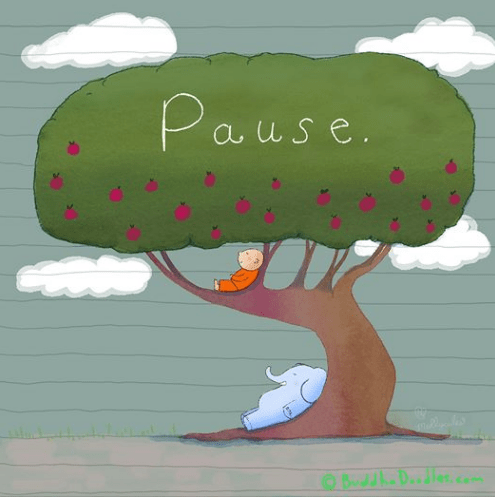
It is time for us to pause and think. It is time for a reset.
Although I’ve spend a large part of my career in higher education, I’m very interested in exploring how similar or different things are in other industries in terms of finding and hiring new talent, onboarding processes, as well as designing, developing, and evaluating new and existing programs!
I am a creative thinker, educator, and a higher education professional with over 10 years of experience in the California community college system. I have worked in a variety of roles, both in student services and instruction, serving the learning needs of a diverse student population and engaging college stakeholders to improve the effectiveness of programs and services for student success and organizational effectiveness. My primary area of expertise is in learning and development, outcomes assessment and evaluation, equity and diversity, accreditation and compliance, program review, and program and organizational effectiveness.
I earned my master’s degree in Public Administration from Panjab University in Chandigarh, India and a Ph.D. in Education with specialization in Higher Education Leadership and Administration from Walden University in Minneapolis, MN.
In my free time, I love to write, paint, sketch, and cook mouth-watering foods that draw me to them.