What I Did Not Know How to See

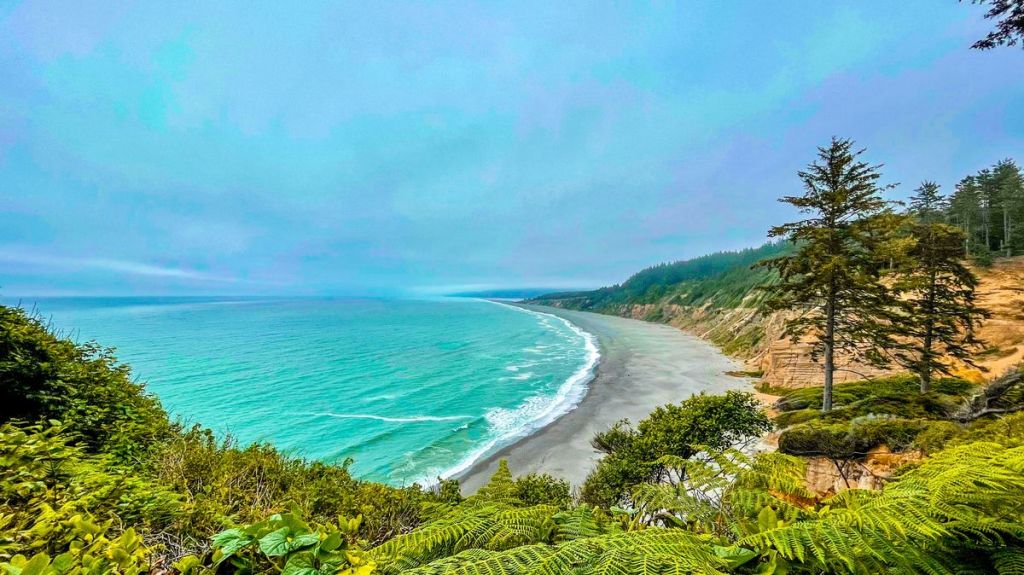
When I lived in Humboldt County, the world felt almost too pristine. It was too open and too unhurried. I couldn’t fully surrender to its quiet rhythms. 

Life there moved at a pace that asked something different of me, something I didn’t yet know how to give. Living now in the Bay Area feels like an entirely different existence—denser, louder, propelled by urgency. 

Humboldt carried the spirit of an older world. It seemed to exist just outside the reach of time itself. The Bay Area, for all its energy and ambition, could never quite hold this spirit.

My life carried me from Northern California to what I think of as its middle stretch. Yet, I found myself missing what I had once struggled to inhabit.

I remember one afternoon in particular. I sat in my backyard and absorbed the warmth of a rare, sunlit day. It was a quiet gift after months of blistering cold and relentless rain. Reclined in a chair, I let the sunlight settle into my bones, the stillness wrapping itself around me like something earned.

Then, from a distance, I heard it: the low, steady hum of an engine. It grew gradually louder, pressing against the calm I had begun to feel. I looked up just in time. A low-flying airplane glided over the small town of Rio Dell. Its presence was brief but intrusive.

Moments later, it disappeared, and with it, the disturbance. A quiet relief followed.

But the sound returned. 

Again, it passed overhead. 

And then again. 

By the third time, I felt a flicker of irritation rise. It was almost enough to make me want to wave it away. I wanted to call out, Hey, I’m trying to rest here. 

But just as quickly, the thought softened. My four-year-old son was absorbed in his own small world. He chased a ball across the yard. His laughter was unbothered by the interruptions above. His presence pulled me back, gently, into the moment I had nearly lost.

I might have forgotten that afternoon entirely if, months later, something hadn’t brought it rushing back with unexpected clarity. While browsing in the library, I picked up a picture book and began turning its pages absentmindedly.

Then I stopped. 

One image held me still: an aerial photograph of my home and my small town, captured from above. It was breathtaking—at once familiar and newly revealed. The book was filled with images of Humboldt County. However, that single photograph carried the echo of that afternoon. It preserved the quiet beauty I had once lived within but had not fully known how to see.

What the Ocean Gives Freely

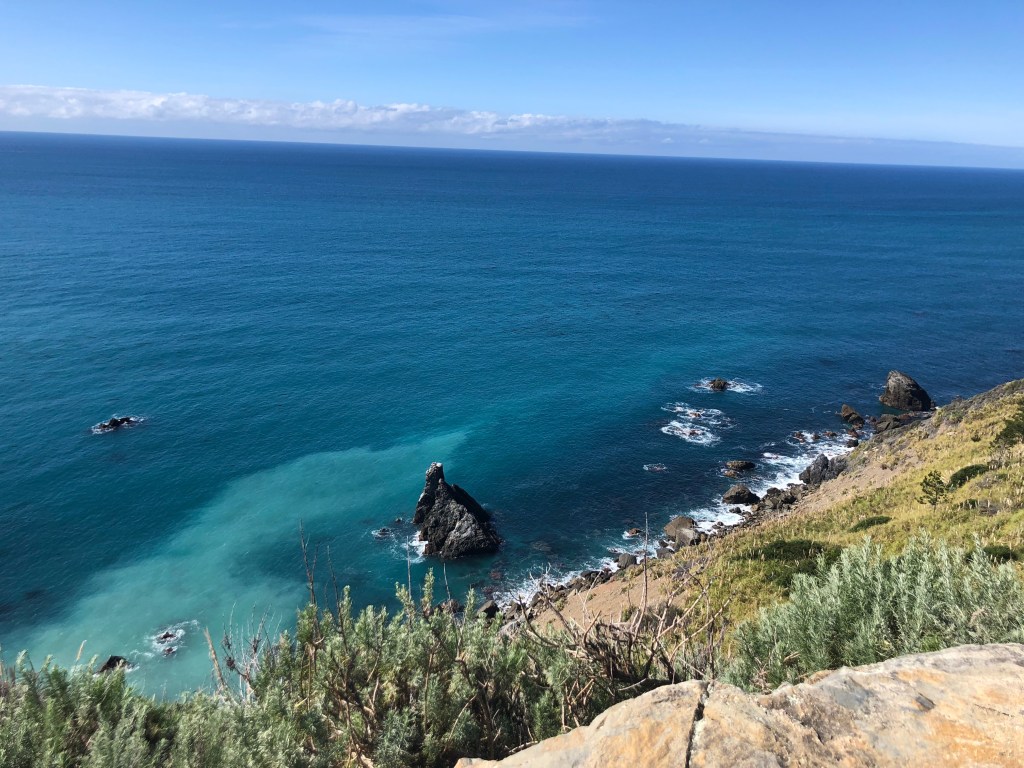
The endless blue ocean looked calm, as though a soft blanket had been stretched over the Pacific as far as the eye could see—this was my view yesterday as I drove along Highway 1 from Cambria to Carmel-by-the-Sea. The drive itself was nothing new to me; I’ve traveled this route countless times. What took my breath away, once again, was the contrast: the rugged, rocky cliffs rising beside the road, the green-folded mountains behind them, and peaks that seemed to promise views no road could ever offer. Here and there, landslides scarred the hillsides—a humble reminder of how close we travel to forces that will, in the end, always reshape the land.

Near Big Sur, Highway 1 had been closed for over two years because of a massive landslide. Just weeks before that closure, I had passed through with my husband and son, taking in the vastness of the ocean and letting the cool, salty air sink deep into my lungs—as though I were being invited to see everything around me with fresh breath and renewed senses. We stopped at Lucia Lodge Restaurant, a quiet bend along the road. Fish and chips tasted better with a glass of wine and the immense blue of the ocean as our backdrop. I remember feeling, at once, so small and strangely whole. The ocean asked for nothing more than our presence—its coastline edged with dramatic curves, rocks stacked in seemingly careless arrangements, waves splashing white against the dark stone, keeping the scene endlessly alive.

At the highest points along the road, the coastline opens into some of its most breathtaking views—vistas to take in and to carry with you long after. The curves and turns of Highway 1 create a rhythm of reveal and retreat, the ocean appearing and disappearing beside towering hills, as if offering brief invitations to look deeper before moving on.

In several stretches, large homes are nestled into the rocky edges—some barely visible, others announced by grand gates and bold stonework that only hint at what lies beyond. For a fleeting moment, I found myself wishing for a house by the sea. Each one looked like a dream. But as we continued, that longing softened into a different understanding: to own a view like this might change how one receives it. These homes are beyond what most can afford, and even those who can often come only in seasons, not to stay. The ocean, however, belongs to no one—and to everyone. It offers its quiet and its fury freely. It meets each of us where we are: those who pass by for a single afternoon, those who linger for a weekend, those who return again and again with no claim beyond gratitude.

And perhaps that is the gift. The ocean doesn’t promise permanence, only presence. It asks nothing of us except to arrive—to stand small before something vast, to feel both humbled and held. In that shared encounter, luxury and longing fall away, and what remains is a simple belonging to the earth itself. That is what draws me back—not the road, not the houses, not even the familiarity of the drive, but the quiet, enduring invitation to witness something larger than myself and to remember, again and again, that it is enough.

I Like Going to Work Each Day 

I like going to work each day.

That may sound simple, even unremarkable—but it is not something everyone can relate to. For many, the workplace is a source of dread, tension, or quiet anxiety. I know this because I’ve lived it. I’ve worked in educational institutions long enough to understand the difference between a place that merely functions and one that truly nourishes the people within it. There was a time when I did not believe a workplace could be something to look forward to. And yet, after three years here, I can say with clarity and gratitude that this experience feels different—deeply and unmistakably so.

Belonging is where learning begins

As a first-generation immigrant, with English as my third language, I have often known what it feels like to be an outsider. To walk into rooms, unsure if I fully belong. To measure myself twice before speaking. To wonder whether my voice, my background, or my way of seeing the world would be understood—or quietly overlooked. Those experiences shape you. They also make you especially aware of what inclusion truly feels like when you finally encounter it.

The place I work now is where I have felt most welcomed—not just accepted, but valued. Here, I am part of something larger than myself. A shared purpose. A collective belief in what education can and should be.

Just this past weekend, we hosted our annual Open House. Families—new and returning—walked through our campus, stopping to ask thoughtful questions, pausing to observe classrooms, listening carefully, and sharing their hopes. Beneath every question was the same essential concern: Is this the right place for my child? Will my child be seen, supported, and able to grow here—not just academically, but as a whole person? Will we belong?

As I listened to parents, I realized how universal this question is. Every family is searching for more than strong academics or extracurricular offerings. They are searching for belonging, safety, and trust. And the answer I can offer—without hesitation—is yes.

What sets this school apart from others with similar hallmarks—Catholic values, academic rigor, athletics, and a focus on social-emotional development—is something harder to quantify but far more powerful. This school invests deeply and intentionally in its human capital. In the people who create the environment where learning happens. In the teachers, staff, and leaders who show up each day not just to deliver outcomes, but to live the values they teach.

Leadership here understands that while a school must be responsibly run—yes, even like a business—it cannot lose sight of its foundation. The balance between accountability and humanity is not easy to maintain. But when it is done well, it changes everything. Decisions are made with care. People are trusted. Growth is encouraged—not just in students, but in adults as well.

When I meet with parents, I often explain that they can expect to see a belief in every child’s capacity to learn and thrive. Especially those who need additional support. Especially those who may struggle quietly. Especially those who learn differently. The resources, systems, and professional expertise are in place—but just as importantly, so is the will.

This school is home to a faculty and staff whose skillsets are broad, thoughtful, and deeply grounded in intrinsic values. They work collaboratively, guided by the belief that shaping young minds is both a responsibility and a privilege. The goal is not simply academic competence, but the development of compassionate, capable, and thoughtful global citizens—children who understand both who they are and how they belong in the world.

I like going to work each day because I know the work matters. Because I feel respected. Because I am surrounded by people who care deeply about children and about one another. And because in a profession where burnout is common, this place has shown me that it is still possible to build a school culture rooted in dignity, purpose, and belonging.

That is not something to take lightly. And it is certainly not something to take for granted.