I am a writer, educator, and lifelong seeker, drawn to the places where story, memory, and lived experience intersect. My work explores lineage, belonging, loss, and return—how the personal is shaped by history, and how the past continues to speak through us.
Alongside my creative work, I bring decades of experience in higher education, where I’ve focused on bridging the space between academic learning and the real world. I write to make meaning of what we carry—across cultures, across generations, across the quiet thresholds of change.
This site is a space for reflection, story, and inquiry—an invitation to walk alongside me as I explore newer paradigms, perspectives, and possibilities.
The endless blue ocean looked calm, as though a soft blanket had been stretched over the Pacific as far as the eye could see—this was my view yesterday as I drove along Highway 1 from Cambria to Carmel-by-the-Sea. The drive itself was nothing new to me; I’ve traveled this route countless times. What took my breath away, once again, was the contrast: the rugged, rocky cliffs rising beside the road, the green-folded mountains behind them, and peaks that seemed to promise views no road could ever offer. Here and there, landslides scarred the hillsides—a humble reminder of how close we travel to forces that will, in the end, always reshape the land.
Near Big Sur, Highway 1 had been closed for over two years because of a massive landslide. Just weeks before that closure, I had passed through with my husband and son, taking in the vastness of the ocean and letting the cool, salty air sink deep into my lungs—as though I were being invited to see everything around me with fresh breath and renewed senses. We stopped at Lucia Lodge Restaurant, a quiet bend along the road. Fish and chips tasted better with a glass of wine and the immense blue of the ocean as our backdrop. I remember feeling, at once, so small and strangely whole. The ocean asked for nothing more than our presence—its coastline edged with dramatic curves, rocks stacked in seemingly careless arrangements, waves splashing white against the dark stone, keeping the scene endlessly alive.
At the highest points along the road, the coastline opens into some of its most breathtaking views—vistas to take in and to carry with you long after. The curves and turns of Highway 1 create a rhythm of reveal and retreat, the ocean appearing and disappearing beside towering hills, as if offering brief invitations to look deeper before moving on.
In several stretches, large homes are nestled into the rocky edges—some barely visible, others announced by grand gates and bold stonework that only hint at what lies beyond. For a fleeting moment, I found myself wishing for a house by the sea. Each one looked like a dream. But as we continued, that longing softened into a different understanding: to own a view like this might change how one receives it. These homes are beyond what most can afford, and even those who can often come only in seasons, not to stay. The ocean, however, belongs to no one—and to everyone. It offers its quiet and its fury freely. It meets each of us where we are: those who pass by for a single afternoon, those who linger for a weekend, those who return again and again with no claim beyond gratitude.
And perhaps that is the gift. The ocean doesn’t promise permanence, only presence. It asks nothing of us except to arrive—to stand small before something vast, to feel both humbled and held. In that shared encounter, luxury and longing fall away, and what remains is a simple belonging to the earth itself. That is what draws me back—not the road, not the houses, not even the familiarity of the drive, but the quiet, enduring invitation to witness something larger than myself and to remember, again and again, that it is enough.
An excerpt from the book I’m writing, The Path Seeker:
Each day, as the sun slid toward the horizon, a different kind of magic stirred. The sky unfurled in deep oranges and soft purples, and with it came the winged performers of the evening. Dragonflies zipped past like tiny helicopters, their iridescent wings catching the last light. Butterflies hovered delicately above our games. Birds wheeled overhead, circling, swooping, as though drawn into our play. And then, as dusk deepened, came the fireflies, hundreds of them, blinking in and out of the twilight like stars that had fallen from the sky.
We chased them, of course. We cupped them gently in our palms, marveling at the soft, otherworldly glow. For a moment, it felt as if we held starlight.
By nightfall, the world softened. The raucous joy of the day gave way to the quiet intimacy of sleep. I would lie there in the stillness and feel something I had never known in the city: a contentment that asked for nothing more.
The sadness I once carried—the ache of leaving behind our home in Ferozepur, my neighborhood friends, the familiar hum of the city—had melted away like sugar in warm milk. In its place came something gentler, fuller. The laughter of old and new friends. The scent of meals shared in the courtyard. The steady rhythm of village life repeated itself day after day.
Here, amid the dust and dragonflies, in a place without pavements or plumbing, I had found what I hadn’t even known I was searching for—belonging.
And each night, as Pothi Mala stood watch beneath a blanket of stars, I felt certain that something beautiful was unfolding. My old life wasn’t vanishing; it was expanding.
That may sound simple, even unremarkable—but it is not something everyone can relate to. For many, the workplace is a source of dread, tension, or quiet anxiety. I know this because I’ve lived it. I’ve worked in educational institutions long enough to understand the difference between a place that merely functions and one that truly nourishes the people within it. There was a time when I did not believe a workplace could be something to look forward to. And yet, after three years here, I can say with clarity and gratitude that this experience feels different—deeply and unmistakably so.
Belonging is where learning begins
As a first-generation immigrant, with English as my third language, I have often known what it feels like to be an outsider. To walk into rooms, unsure if I fully belong. To measure myself twice before speaking. To wonder whether my voice, my background, or my way of seeing the world would be understood—or quietly overlooked. Those experiences shape you. They also make you especially aware of what inclusion truly feels like when you finally encounter it.
The place I work now is where I have felt most welcomed—not just accepted, but valued. Here, I am part of something larger than myself. A shared purpose. A collective belief in what education can and should be.
Just this past weekend, we hosted our annual Open House. Families—new and returning—walked through our campus, stopping to ask thoughtful questions, pausing to observe classrooms, listening carefully, and sharing their hopes. Beneath every question was the same essential concern: Is this the right place for my child? Will my child be seen, supported, and able to grow here—not just academically, but as a whole person? Will we belong?
As I listened to parents, I realized how universal this question is. Every family is searching for more than strong academics or extracurricular offerings. They are searching for belonging, safety, and trust. And the answer I can offer—without hesitation—is yes.
What sets this school apart from others with similar hallmarks—Catholic values, academic rigor, athletics, and a focus on social-emotional development—is something harder to quantify but far more powerful. This school invests deeply and intentionally in its human capital. In the people who create the environment where learning happens. In the teachers, staff, and leaders who show up each day not just to deliver outcomes, but to live the values they teach.
Leadership here understands that while a school must be responsibly run—yes, even like a business—it cannot lose sight of its foundation. The balance between accountability and humanity is not easy to maintain. But when it is done well, it changes everything. Decisions are made with care. People are trusted. Growth is encouraged—not just in students, but in adults as well.
When I meet with parents, I often explain that they can expect to see a belief in every child’s capacity to learn and thrive. Especially those who need additional support. Especially those who may struggle quietly. Especially those who learn differently. The resources, systems, and professional expertise are in place—but just as importantly, so is the will.
This school is home to a faculty and staff whose skillsets are broad, thoughtful, and deeply grounded in intrinsic values. They work collaboratively, guided by the belief that shaping young minds is both a responsibility and a privilege. The goal is not simply academic competence, but the development of compassionate, capable, and thoughtful global citizens—children who understand both who they are and how they belong in the world.
I like going to work each day because I know the work matters. Because I feel respected. Because I am surrounded by people who care deeply about children and about one another. And because in a profession where burnout is common, this place has shown me that it is still possible to build a school culture rooted in dignity, purpose, and belonging.
That is not something to take lightly. And it is certainly not something to take for granted.
The field of diversity, equity, and inclusion (DEI) has been booming for the last several years. Yet companies large and small, including educational organizations, need professional help with well-designed DEI policies, frameworks, and practices that alleviate challenges, establish an inclusive and sophisticated culture and nourish growth and opportunity for everyone. In a truly diverse, equitable, and inclusive workplace, everyone feels welcomed, accepted, and respected and has a deep sense of belonging. But that is rarely the case. In my nearly 20 years of working in education and other industries, DEI efforts have yet to move the needle on what this work should entail. This article addresses why the DEI work needs re-imagination and reconstruction and its imminent impact on social justice issues and our collective future.
Expertise as a Claimed Rule
Expertise is beneficial in any field, but it should be something other than a requirement when the field is evolving. Among the current approaches to DEI work is a preference to hire experts in the field. Having been a rookie and scholar-practitioner in DEI work long before it gained nationwide attention and momentum, newbies are just as capable as many experts. Why so? Because this work requires an abundance of human skills, creativity, and a growth mindset, primarily more than experience. Still, somehow the DEI industry and organizations value expertise as a claimed rule to be effective in DEI work and practices. A homegrown approach or hiring a relatively new DEI professional works just as well if the organization is genuinely committed to doing the work to improve the outcomes.
Accents – The Elephant in the Room
Having worked with numerous organizations on professional development training and workshops on DEI-related topics, I have observed a recurring trait. Most DEI facilitators and speakers that provide training on microaggressions, biases, race, culture, intersectionality, etc., represent the dominant (American) accent and outlook on race, culture, and diversity, and rarely do they have a foreign accent. Why are accents relevant to the DEI work? An accent is how one pronounces words and sentences. It also means that people with accents speak more than one language and are from another country or geographic region. According to the Linguistic Society of America, “everyone has an accent,” yet this variation seems to have more significant implications for those whose accents stubbornly point them to their home country, seemingly making certain accents sound more like an accent than others.
In the realm of the DEI work, suppose we predominately engage DEI professionals within the same regional contexts (e.g., western) where we’re trying to impact change rather than expose ourselves to more global contexts (e.g., oriental). In that case, the scope of impact may be limited. It does not minimize one accent over another but highlights the need to increase the diversity and inclusion of foreign accents in the DEI work. Foreign accents signify people bringing different experiences, values, cultures, and orientations that help broaden our cultural and racial contexts. To assimilate, only some immigrants engineer the dominant accent to fit in. Nor does this mean that speakers of other languages with accents are less experienced and capable in their chosen field of work, but prejudices in terms of accents have long existed in the grey zone of political correctness. As DEI professionals, we seek to enrich our work by including people from all walks of life.
The ‘Asian’ Checkmark
Part of addressing the DEI challenges in the workplace is the overreliance on how demographics are collected about America’s population by race. A typical requirement for applying for any job is collecting demographic information, and it tabulates data on the features or characteristics that define an individual or population. While the Asian population in the US is only 5.6%, it represents a large geographic area of more than 20 countries in the East, Southeast Asia, and the Indian Subcontinent, each with its unique cultures, histories, legacies, languages, and other characteristics. Of all the 50 states, Hawaii represents the highest Asian population at 39%. And about 71% of the adult Asian population were born in another country. Yet, all Asians are often lumped into a single checkmark to gather this information. No wonder many Americans fail to comprehend the uniqueness of the Asian populations, their histories, cultures, backgrounds, experiences, and perspectives, and the richness they bring to this country.
Too often, the Asian population is painted with a broad brushstroke without much consideration for their uniqueness regarding race, culture, and ethnicity. To begin the change process of increasing diversity, equity, and inclusion in the workplace, we must reimagine and reconstruct our systems on how we view, collect, and analyze information that defines a population. For example, while I may relate to some cultural and social practices and values with those in Japan, the Philippines, or Vietnam, my unique experiences and ideologies are part of my roots in India and what distinguishes me from others. Upholding our racial and cultural heritage is a huge part of our identity and existence. Being huddled or massed into a common denominator does nothing to bring value to the DEI work we aim to accomplish.
The Black and Brown Experience
An essential part of American history is learning the painful lessons of the Black people’s experience and how it has shaped the nation. Black people led the movements for equality and racial justice that has, in turn, shaped the dialogue on race, equity, and civil rights in this country. Growing up in a country that was historically under British colonial rule for almost 200 years and still has remnants of that past, I can relate to the struggles of institutionalized racism, oppression, and the fight for equality and social justice.
The non-violent movements led by M.K. Gandhi in India and Martin Luther King, Jr. in the United States say much about how race is viewed when oppression and injustice prevail. While the struggles of Black and Brown people are similar in some ways, we must be cautious not to consolidate them into one experience. The Black Americans’ past is as unique to the United States as the Indian Americans’ past in India. While oppression and discrimination anywhere may look similar in characteristics, there is no one-size-fits-all for everyone. DEI professionals would be well-served to create opportunities to surface and inform us about social justice issues faced by non-dominant groups in the workplace with distinct histories, ethnicities, cultures, and backgrounds.
DEI – Concepts That Need to be Invested, Nourished, & Protected
Diversity, equity, and inclusion are fragile concepts whose meanings and interpretations depend on how organizations view and utilize them in the workplace. If organizational leaders consider the DEI work merely as a placeholder rather than central to their future direction, they lose momentum, purpose, and value. The dominant and non-dominant groups are affected by how organizational leaders invest in DEI work. Individuals engaged in the DEI work need adequate resources, tools, power, and authority to nourish and replenish what’s required to make this work. The DEI work is beyond anything we’ve done in the past because engineering this work requires a creative and timely readjustment of systems, processes, and policies to set the right conditions for a value-based climate and environment in which growth and opportunity take shape. Therefore, who’s on top and who regulates who matters a lot. Professionals leading the DEI work in organizations, whether as internal staff or consultants/experts, are change agents and should be insulated from workplace politics and the nuances of what this work could entail.
The next time we look for a DEI professional, know that a newbie may be as good as an experienced one. The most critical attributes needed are an abundance of human skills, creativity, and a moral compass set on the right DEI values. Remember that speakers of the English language with foreign accents are an asset in this line of work. Make a conscious effort not to label individuals and populations into a simplistic form of social or demographic identity but rather understand and recognize the uniqueness they bring to our world through their distinct histories, legacies, experiences, cultures, languages, etc. Each individual brings a unique perspective to our collective understanding, and the DEI work requires us to get everyone’s identities and voices to the table. Our work aims to bring diversity, equity, and inclusion to life in the workplace, so why not reconstruct our current efforts and reimagine our future direction that bridges the gaps?
About the Author
Ruby Sodhi, Ph.D., is an education expert, DEI professional, speaker, and trainer. Ruby is the founder of Bridging It All, which helps organizations develop achievable and measurable DEI plans, frameworks, and strategies. Ruby has been part of the DEI efforts since the early 2000s. She led the DEI work when the concept was relatively new and limited resources were available to learn how to shape processes and policies to guide the DEI work. Over the past several years, Ruby has helped organizations implement DEI designs aligned with their vision, goals, and outcomes. She utilizes an asset-based and performance-based approach to guide organizations and facilitate professional development training and workshops in a welcoming, safe, and inclusive environment to boost performance and innovation in the workspace while addressing the gaps for disproportionately impacted populations.
The importance of writing ACCURATELY about history cannot be understated. As the world around fast changes to new trends and technology, so has our appetite for anything new, regardless of its source or accuracy. The glut of misinformation mounting in print and online is overwhelming, and never before has it been easier for anyone to distort facts and interpret history to suit their needs and motives. Left to interpretation, actual historical events can be at the mercy of the people with limited understanding and skill. In changing the narration about the actual events of the past, we deny others the benefit of truth and reality. Hence we erase from the memory the important historical events that led to why things are the way they are today. Once we’re removed from the truth, we are bound to follow an indoctrination or propaganda blindly.
I was recently invited to attend a book launch of The Punjab Chiefs: The Lost Glory of The Punjab Aristocracy in Punjab and Pakistan because a chapter about my Guruharsahai family’s history is included in the book. The author, Bobby Singh Bansal, had reached out to my family in early 2018 as he was “documenting their past” (Bansal, 2022). The book was sold out within minutes of its launch at the Chandigarh Golf Club event on April 6, 2022. I had to wait several weeks to buy a copy and read the information written about my family. The other day, I got my hands on a copy of this book. As I flipped to the pages about my family, to my utter bewilderment, the author had included unsubstantiated information about the Chiefs of Punjab in Guruharsahai family tree. Had this been a work of fiction, I would not have bothered to write this blog, but it isn’t, so it needs to be corrected for the record and posterity.
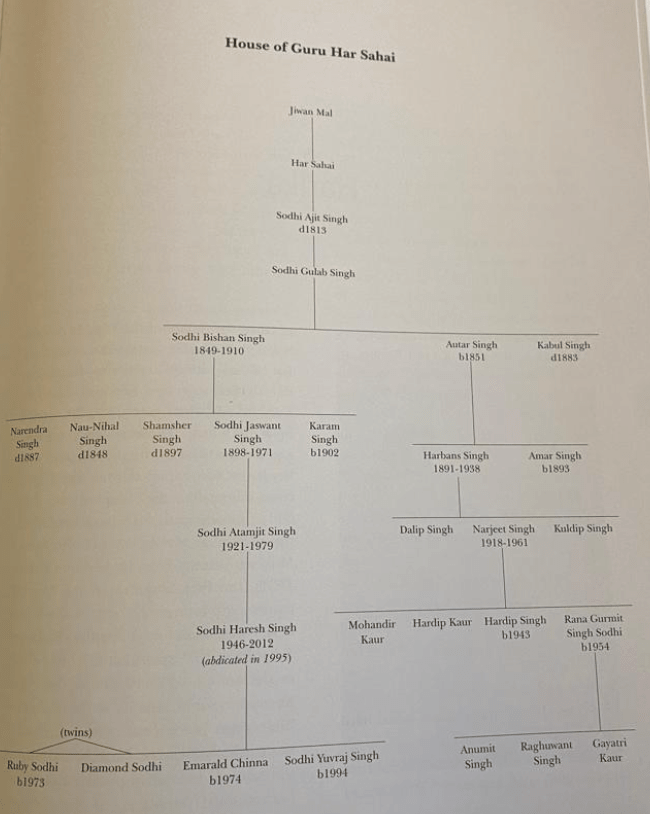
In the book The Punjab Chiefs, the chapter on the House of Guruharsahai begins the first two pages with the correct history of the Guruharsahai family, beginning with Jiwan Mal, who named my ancestral village after his eldest son Guru Har Sahai. But then the writer (Bobby Singh Bansal) somehow deviates from thereon. The writer seems to have taken it upon himself to draw an excessive family tree that gives prominence to an offshoot Sodhi family (Autar Singh) who’s related but is NOT the direct descendants of Guru Ram Das Sodhi, and whose family was never the Chiefs of Punjab from Guruharsahai. My father, Haresh Singh Sodhi, once noted that “Since the time of Jimal Mal who was 7th in descent from Guru Ram Das Ji all our ancestors have been living in Guruharsahai.” The writer ignores the closest relatives of the Guruharsahai family, who are the direct descendants of Guru Ram Das Sodhi and whose ancestors resided in Pothimala and Guruharsahai for centuries but handpicked the one name he chose to highlight in this book. To do this, Bansal (2020) arbitrarily deviated the family tree from Guru Har Sahai’s eldest grandson, known as Sodhi Gulab Singh, who had three sons (Sodhi Bishan Singh, Autar Singh, and Kabul Singh).
The eldest son was Sodhi Jaswant Singh (the 14th direct descendent of Guru Ram Das Sodhi and my great-grandfather). Bansal not only made a concerted effort to include Sodhi Gulab Singh’s second son’s name, Autar Singh, but also drew a parallel family tree outlining the lineage down to their present generation while barely mentioning the third son’s name, Kabul Singh, and ignoring the rest of their descendants.
What was the reasoning for highlighting a distant relative that is not the direct descendant of Guru Ram Das Sodhi and has little to nothing to do with the Chiefs of Punjab in Guruharsahai? Other than the fact that one of their current descendants, Rana Gurmeet Singh Sodhi, was involved in Punjab’s politics over the last two decades. The author dedicated a page and a half to glorifying the achievements of this politician at a time when Punjab, particularly Guruharsahai, had undergone the worst phase in its history. Crime, corruption, unemployment, and drug abuse have skyrocketed during the past two decades, but this book puts a different spin on the reality of Guruharsahai. Simply put, the House of Guruharsahai chapter of this book is a slap in the face of the real history of Guruharsahai as it ignores the other pertinent Sodhi families more closely related to the Chiefs of Punjab in Guruharsahai. The Punjab Chiefs book’s chapter House of Guruharsahai is disappointing for anyone interested in fair, unbiased, and accurate information about the Guruharsahai family’s historical records unless one supports the indoctrination or propaganda portrayed in this chapter.
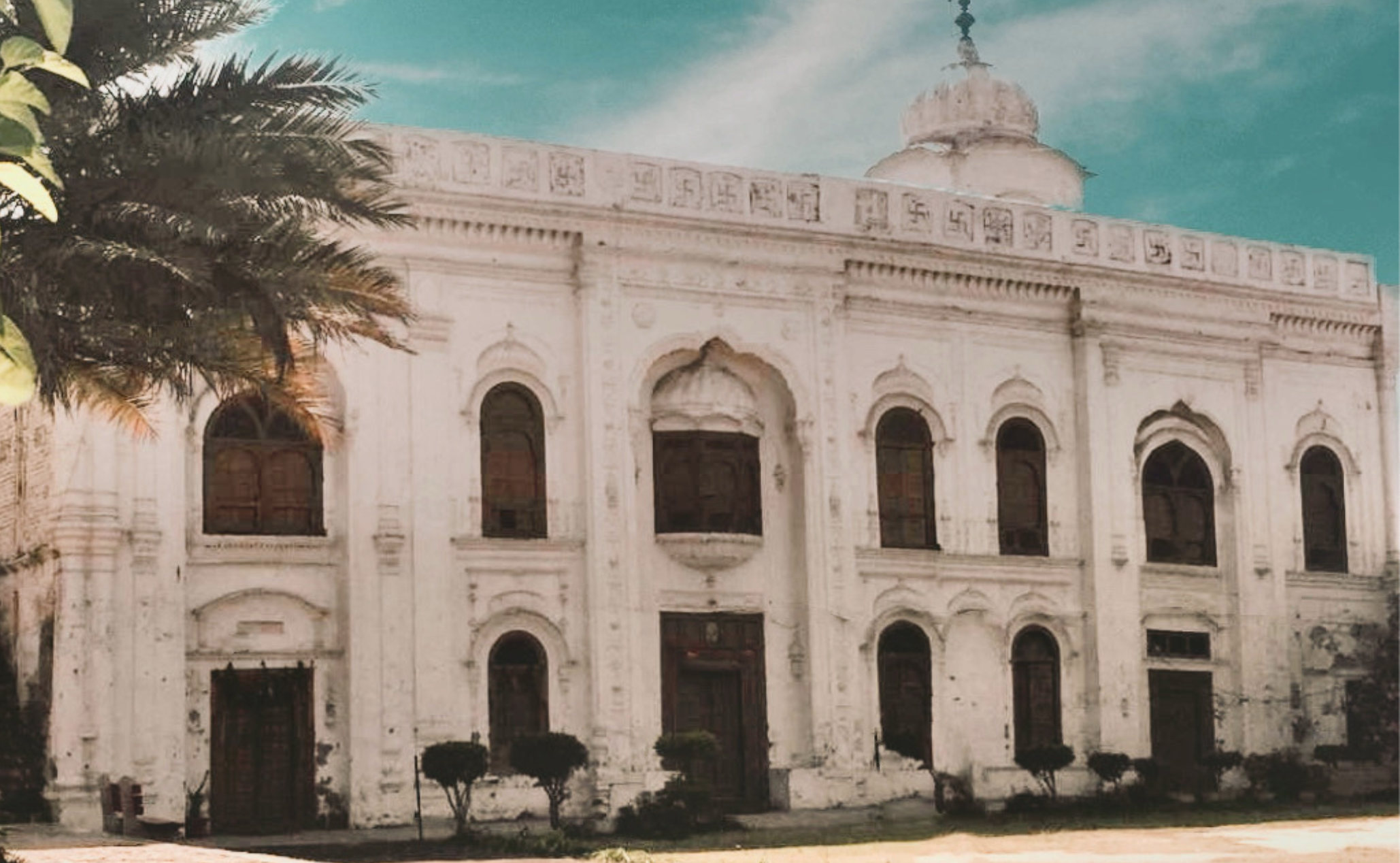
In his speech, Bobby Singh Bansal had promised to fill in the gaps of over a century by publishing this book that highlights the lost glory of the chief families of Punjab. In fact, he has denigrated my family’s real place in history. He has overshadowed what Guruharsahai is and should be most well known for after the Sodhi family – Pothimala (www.pothimala.com), a historical site showcasing the family’s rich, descriptive murals, holy relics, and tradition of what it stands for: universal brotherhood. Thanks to authors like Bobby Singh Bansal, places like Pothimala (a 300+-year-old building that contains hundreds of splendidly painted murals bringing together the tales, folklore, rituals, sagas, and historical records from the Mahabharat, Ramayan, Mughal, and Sikh empires that blur the religious lines) would be entirely lost to time.
I wish the author had the hunger to chronicle what Pothimala stands for as much effort he put in to glorify a peripherally associated relative who is not one of the Chiefs of Punjab. Bobby Singh Bansal wrote incredible accounts of Rana Gurmeet Singh Sodhi’s political successes and achievements in shooting championships but failed to write about my grandfather, Tikka Atamjit Singh Sodhi who was the 15th direct descendent of Guru Ram Das Sodhi; who was educated at Aitchison College in Lahore; who won national championships in double trap and skeet shooting, who was given the best sailor award by V.V. Giri, and who was the chief of the Guruharsahai family.
The flood of disinformation surrounds our everyday life. The least we can do is set the record straight. In that attempt, I want to also note that the writer, Bobby Singh Bansal, plagiarized the writing I sent him in 2018, in which I had provided a written description about my family. I have no problem with him using my writing, as long as he had paraphrased it or used it within quotes. But to simply put it in his book as though it is his own writing is not acceptable.
A giant vacuum still exists, and The Punjab Chiefs book’s chapter House of Guruharsahai only adds more disinformation about my family. The Gazetteer of India, published by the Revenue Department of Punjab in 1983, noted that Sodhi Bishan Singh had “given away to his brother Autar Singh half of the property, except the abadi land, for his lifetime.” Autar Singh is Rana Gurmeet Singh Sodhi’s earliest ancestor in his family tree noted in The Punjab Chiefs book, but the writer neglects to point out this crucial historical fact that the lands were never returned to the rightful owners, the direct descendants of Guru Ram Das Sodhi.
On the other hand, our distant relative (Rana Gurmeet Singh Sodhi), whose name has now been added by Bobby Singh Bansal to the book chapter House of Guruharsahai, has allegedly received more than one compensation for the lands from the government, lands which were given to his ancestor, Autar Singh, only for his lifetime. Even though Bobby Singh Bansal acknowledged that he was “only documenting their past,” his research missed identifying these vital facts which are publicly available. It also undermines the Guruharsahai family’s suffering from a barrage of problems under an independent Indian government. The reality of what families like mine are going through is unprecedented. To deny this truth is to fool yourself and others. This blog is my effort to set my family’s record straight.
The work of writing Guruharsahai’s accurate history is unfinished but I’m confident that it will find its rightful narrator who will do justice to its history and shine a bright light on the true reality of the Guruharsahai family and the area have endured through the ages.
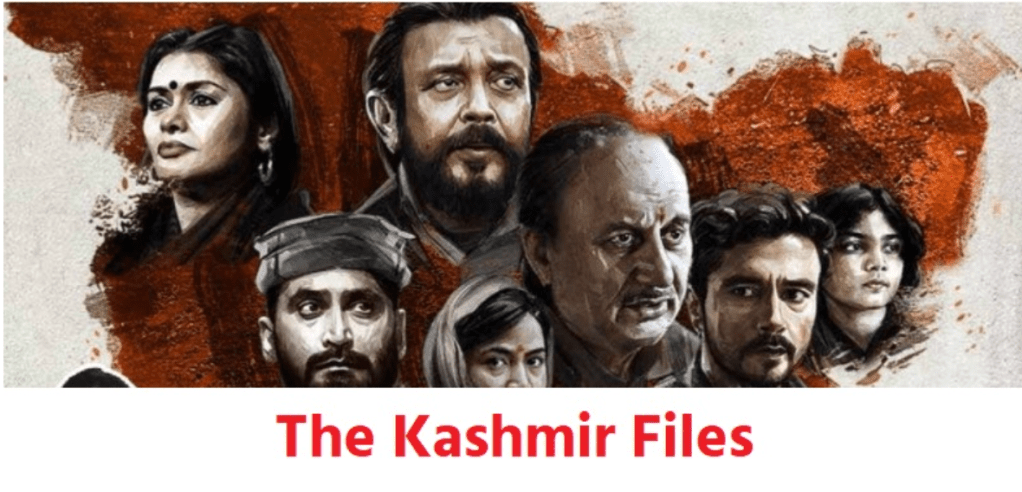
Movies impact our lives in one way or another. They make us smile, cry, feel pain, and various other emotions. The Bollywood film industry has had a long passage of making movies known for their golden era showmanship to where it is now. But of late, I’ve noted that most Bollywood movies fall short of good entertainment as many are repetitive, lusterless, and often unoriginal. But some go beyond the barrier of mere entertainment and provide deep insights and value. After almost two years of a pandemic lockdown, I entered a theatre last week to watch the movie The Kashmir Files. I did not know that this movie triggered a national commotion about its content, focus, intent, and credibility.
I’ve heard various sentiments from those who oppose or favor this movie, and their opinions are largely echoed by the media commentators and their fervent reviews about the movie. Many critics view this movie as a flawed interpretation of actual events or selective presentation, while others label it indoctrination or propaganda. But I would be remiss not to notice the narrative quality and presentation and the impeccable performance by many well-known artists helped build a stimulating plot. What stood out for me was that this movie exposed human vulnerability. Added to that is the larger vulnerability of a nation entangled in a post-independent era of inequitable growth, identity, and political concentration of power where people of minority groups are most adversely affected by the policies, actions, and apathies of the government.
Kashmir was known as the hub of research and knowledge for scholars worldwide, an important detail underlined in the climax scene of the movie. But the harsh reality of the Kashmiri Pandits was brilliantly delivered in a single dialogue in the film, “Kaisee vidambana hai…Kashmeer ko log jannat maanate hain. aur Kashmeer ko jahannum banaane vaale bhee jihaad isalie karate hain ki unhen jannat mile.” To paraphrase and translate, it is such irony that people consider Kashmir a paradise, but the people who make hell for others in Kashmir do it in the name of jihad so they can go to heaven.
The director used powerful and moving personal stories to showcase parallel worlds and ideologies about a place most know little about. A thought-provoking take!
While the Western world seeks to understand better and adopt an inclusive framework of diversity and equity in all spheres of their lives, I find this discourse essentially nonexistent in India’s academic, social, and political circles. It’s almost as though equity, diversity, and inclusion are constructs independent of other variables when in fact, racial and ethnic minority cleansing is at the forefront of most social evils in this nation.
Race and ethnicity are often used as clichés for education and employment, especially for quotas and reservations that avoid any sense of the reality of a mounting divide in India’s socially, economically, politically inequitable society. For example, most people increasingly rely on low-wage workers, child laborers, and house servants to do the bulk of work that the rest of us cannot or aren’t willing to do. At the same time, we callously indulge in flippant discussions about race, ethnicity, equity, and inclusion with no real meaning or impact.
Perhaps one of the reasons why so many people are rushing to watch The Kashmir Files is because the story shines a spotlight on some of the most pressing issues facing our society – race and ethnic consciousness. The movie brings to the forefront how ethnic violence and ethnic cleansing of innocent people are repeatedly used in the name of religion, or in other words, terrorism.
Watching this movie brought back memories of the 1980s in Punjab that started a decade-long insurgency by Sikh militants in northern India that changed everything for me as a kid growing up in a village in Punjab. The frequent hidings, an eerie silence of anticipated ambushes and the constant fear of death, and the sound of bullets firing still haunt my memories of those times. Terrorism can be a slow-moving target of intimidation, radicalism, violence, and extremism. Still, history shows that when a nation and its people don’t stand up against hate, it can breed absolute madness carried out principally against innocent women, children, and older adults, all under the guise of religion.
The religious persecutions, exodus, and genocide carried out against the Kashmiri Pandits, as illustrated in The Kashmir Files, is a soul-stirring reminder of how the actions and inactions of the government, educational institutions, and politicians can infringe upon the rights and values of the minority groups in a secular, sovereign, and democratic country like India.
Regardless of your stand regarding this movie, it provides the movie-goers with a critical perspective. They must decipher and define themselves and not be force-fed like a typical Bollywood movie. The movie critics are proof of that. The bottom line is people affected by terrorism in Kashmir and elsewhere have suffered a lot. The scars of terrorism forever remain for those who have faced uncertain death and devastation. Movies like this can usher a new era of entertainment in the Bollywood industry and the type of audience it attracts. Once the dust settles on what people think this movie is and isn’t, it is culturally and historically significant and has the hallmarks of a critically acclaimed international audience.
Doing the same thing repeatedly and expecting different results is a definition of insanity. That is what is happening with the circus of elections every few years.
It is well known that most political parties make false promises around the turn of the elections, but their corrupt fervor is ruthless once in power. The Congress party has ruled in my ancestral village, Guruharsahai (Punjab, India), because they won the last four elections; in other words, they have ruled for the previous 20 years. I use the word “ruled” instead of “served” intentionally because if you take a quick look at my village and its surrounding areas, it is easy to comprehend the complete disarray and dysfunction the area is undergoing.
There is a lack of public water system; the roads resemble the craters of the moon, there is zero effort to provide general healthcare despite a looming pandemic, some of the streets and sewage system was quickly built in such a huff only recently that they will not withstand the first monsoons to hit the region in the next few months. Not to mention the state of the local public schools built only recently in hurried and haphazard construction to showcase some progress by the Congress party. But it does little to make safe and healthy school buildings and environment for the children.
Perhaps the biggest challenge and setback to my village has been the widespread introduction and sale of a lethal drug called the Chitta (such as Fentanyl and opioids).
The business of drugs is the most sophisticated operation being conducted as it is among the largest cash-crop for the area. What’s mind-blowing is that its rapid use and continuous flow are under the direction and supervision of the political leaders, their accomplices, and the police. They were elected and hired to protect our communities from such substance abuse, but they are the biggest reason for the downfall of my village.
That is the situation of my village after 72 years of India’s independence. Winston Churchill rightly predicted the so-called political “leaders” as independent India’s ‘thugs’ and ‘scoundrels.’ They have managed to reduce my village into a depressed economy with high unemployment and drug overdose rates.
This madness must stop now! We need to end the election circus that leads to no real change and improvement. We need a better vision and plan for my village and Punjab. When you vote on February 20, you’re not just voting for a political party; you’re voting for a future that is either the same old sad reality or a new beginning for change and improvement.
Think hard before you support a candidate and cast your vote because their record speaks more than their empty and meaningless words. Start with electing politicians who have the history and credibility to make a positive change.
To bring change, we must begin to admit what is wrong and do right. I’m doing my part, are you?
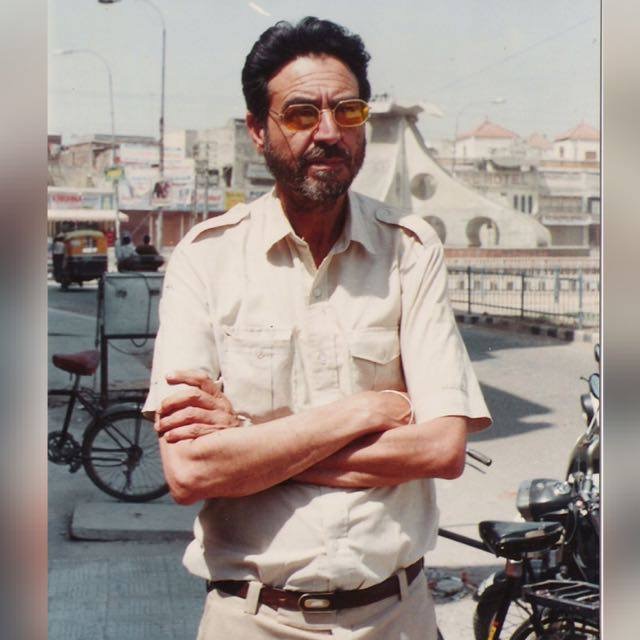
He was a man for all ages, futuristic, leader, community organizer, music lover, and he was also my father. He was the perfect blend of someone with a global mindset with ancient values inheritance. He taught me how to lead with inner strength, fortitude, and righteousness. He guided me through the ways of life in a world (India) that is starkly different and often rumbustiously chaotic from the one I live in now (USA). But he never faltered when things got tough. My dad was the kind any girl would be proud of because, in a world where men ruled and treated women as second-class citizens, he made not just one but all three of his daughters inside out strong, empathetic, surefooted, and self-reliant.
I remember when my father became the Sarpanch, the head of a local government council of 22 villages, how many people from neighboring villages poured in regularly to seek justice. The gatherings were often enormous, loud, and noisy, and the disputes ranged from family squabbles to business and political issues. Even at a tender age, I could see the leadership, strength of character, and utmost compassion my father demonstrated in his observations and rulings. He was indeed a reverend father figure of the area, and he never lost sight of doing what’s best for the local communities.
I also remember when he put the government funds to good causes, built new roads, set up electricity poles and power around the village. Such work was the first, and the only time a politician had done to benefit the community without ulterior motives. You see, my father saw his role as being able to serve the people and give back the power to improve people’s living conditions. Unfortunately, the current day situation in those villages is a far cry from this history. As I reflect on my father’s contributions, I am humbly reminded that what he could do (even at the most basic level of government – the Sarpanch) no other politician has ever since done for the overall wellbeing and development of these villages. Indeed, it is never the position that one holds that begets the best work, but the power of one’s intentions will make all the difference in the world for just themself or everyone.
Imagine for a moment, if all the politicians thought and acted like my father did, how different India would have been today. But the large majority of politicians, from the lowest to the highest level, are more busy amassing their personal wealth and real estate than doing what people voted them for them to do. Our politicians are the single biggest reason why India lagged behind China when the two nations were on an equal footing about 20 years ago. So what happened? The answer is in what didn’t happen. China was able to curb its corruption at every single level of its system of organization and governance. But India is riddled in a never-ending vicious cycle of egregious corruption from the bottoms up. That’s why we are far away from any real progress or nobility of work under the current political environment. But I am ever so humbled to recognize that my father could do and accomplish so much for his community given the short time he had.
As Maya Angelo said, “At the end of the day, people won’t remember what you said or did, they will remember how you made them feel.” That’s how my father’s name now lives on in the hearts and minds of people he touched.
Yes, my father was one of those people who give more than they take away. He lifted people out of nothingness; he helped them develop confidence; he helped them build and grow their lives and careers. He could do all this and much more mainly because of his family’s long-standing history and legacy. You see, my father was raised at a time of abundance and opulence but with a higher consciousness of being a contributing member of society, a philanthropist, and an architect for a better tomorrow for everyone. His name will go down in history as being able to carry forth the legacy of what his family stood for: improving the social and economic conditions of entire communities and promoting universal brotherhood. And I remember him fondly on this day, the day he died, as someone who taught me how to be of service to others, holding my head high, fighting for justice and equality for all, and navigating this exponentially changing world with a strong moral compass.
The word nepotism is the practice among the powerful, influential, and wealthy individuals in favoring relatives and friends, especially by giving them jobs or contracts or other ways to provide them with monetary favors. It should not be a surprise when someone gives their nephew a job as a Sales Clerk at their clothing showroom. But it should be of concern when persons in positions of higher authority in public and private jobs place their favorite persons who are far less competent in an area that requires a combination of higher learning, training, and skill. Nepotism can also mean providing special privileges to friends, relatives, colleagues, or acquaintances for employment, career, or other financial decisions. While nepotism exists in every culture and society, it is a highly sensitive issue. In this article, I focus on two industries, US higher education, and Bollywood in India and their indistinguishable struggles with nepotism.
The US higher education ranked #1 in the world several decades ago, but as of 2019, the US ranks at an unimpressive #36th. While the US higher education is an excellent education system and is unique in some ways, its ranking has been steadily slipping down because of several challenges that colleges and universities face. Some of those challenges haven’t fully unearthed. I have spent the last twenty years of my professional career in the US higher education, and I have seen my fair share of a significant challenge facing the educational organizations of all sizes – Nepotism at different levels of an organization.
I have witnessed first-hand how nepotism can take root at one level of the organization (usually at the top tier of the administration) and spread like wildfire throughout the organization. It almost feels like a musical chair game; once the music starts (typically when a new leader joins an organization), everyone must quickly take sides and join the circus of nepotism and cronyism, or be singled out. Given how the educational organizations function, no one can hide their true allegiance or alliance. Nepotism has a momentum and a life of its own. The favors are often in the forms of a promotion, reorganization, or adding more departments/programs under the favored person’s supervision—bottom line: More money in their pockets.
The Real Bollywood
Let’s take a look at Bollywood, the entertainment hub for India’s 1.3 billion population. Not only is the name Bollywood an imitation of Hollywood, but it’s makeup is similar to what goes on in Hollywood. Most newcomer actors in Bollywood are forced into signing up for low-cost, mediocre roles until they can prove their likability by the audience. Women are even susceptible to sexual harassment, non-consensual sex, and rape by the industry toughies. Think about Harvey Weinstein’s decades of sexual abuse in the US entertainment industry that has only come to light in recent months.
Bollywood has a notorious reputation for giving a red carpet welcome and treatment to the kids of Bollywood stars, known as star kids. Regardless of the majority of star kids’ ineptitude and awkwardness at acting, they get the leading roles in movies while making it harder for ‘outsider,’ actors who have no links to Bollywood celebrities to get the right parts in films. In many instances, the Bollywood establishment makes it difficult for lesser-known but highly talented artists to reach the peak of their performance and career. Rumor has it that the industry establishment has an ‘elite club of Bollywood’ that willfully scrutinizes and antagonizes any ‘outsider’ and works closely to ensure anyone on their blacklist doesn’t last too long in that profession.
Once nepotism manifests itself in an organization or an industry, it can quickly build up the momentum for cronyism, mediocrity, low morale, and poor values that are hard to break away. While nepotism is prevalent in every industry, most people are fearful of speaking about it, perhaps for fear of retaliation, and fear of being singled out, or simply because they have ties of kinship with those who practice nepotism. Avoiding such a conflict may seem to be a safe bet, even at lower motivation, work satisfaction, and work commitment.
Sushant Singh Rajput
Sushant Singh Rajput was an immensely talented, intelligent, good-looking, well-liked, and a promising A-list star who recently committed suicide. The alleged bullying and oppression by the infamous ‘elite club of Bollywood’ unquestionably wanted Sushant Singh Rajput out of the film industry. The social media sites in India are abuzz with a litany of complaints, testaments, and petitions to investigate what drove this fine young actor to kill himself and who all were behind this desperate attempt to limit his potential. One clue that recently came to light was a distinctly offensive and disdainful twitter remark. It was an attempt to publicly bash Sushant Singh Rajput by banning him from getting any future roles in movie productions in Bollywood. The unashamed culprits behind this ill-willed tweet were none other than some of the most famous Bollywood movie personalities and production companies. These include Salman Khan Films, Sajid Nadiawala, T Series, Yash Raj Films, Balaji Motion Pictures, and many others. Sushant Singh Rajput’s decision to commit suicide and not leave a suicide note is not an act of cowardice but silent indignation toward Bollywood elites who made it impossible for him to carve his way out of an outcasted position they held out for him. The ordinary people understand Sushant’s silent resentment, but in Bollywood it is a deafening silence.
Nepotism in Bollywood
So how does the practice of nepotism work in Bollywood? The Bollywood star kids are the sons and daughters of famous Bollywood personalities. Star kids like Alia Bhatt, Abhishek Bachchan, Sonam Kapoor, Karan Johar, Sara Ali Khan, Jhanvi Kapoor, and many more have been a shoo-in for leading roles in movies from the getgo of their careers. But what has been most forthcoming about their performances is a vain sense of privilege, power, elitism, and arrogance that outdoes their acting debuts. Most star kids emanate an ostentatious loftiness of acting being ‘in their genes.’ Still, nothing can be farther from the truth because most of them have failed miserably to impress the audience, despite their star-studded newcomer allure because of their visibly inept and mediocre skills in acting. For now, many of these star kids continue to ride the ebb tide of their parents’ popularity, hoping that something about them will stick as unique or palatable in the hearts of the audience.
The media is primarily to blame for overlooking the lackluster talent that exists in most star kids but making them look like larger-than-life individuals who are projected as having the best shot for success. The media is irrefutable and unabashed in writing about what cool new things the star kids have acquired, what party they attended, what designer clothes they are wearing, where they shop, and so on. For most of these star kids, the media hounds for their next story long before they even decide to join the film industry.
A Few Brave Hearts Including Kangana Ranuat
However, few brave reporters have time and again asked various Bollywood stars in different venues about the problem of nepotism. Almost all the celebrities interviewed for this question have carefully avoided answering the real question while crafting a cheeky, smirky, and often belittling remarks to the reporters for asking such an absurd question, or making light of the whole issue. In some cases, they have shown themselves to be oblivious to any nepotism triggers or ruled out that nepotism exists. Bollywood industry employs roughly 20,000 actors each year. Only one actor has steadfastly raised the issue of nepotism in this industry thus far – Kangana Ranuat. Kangana Ranuat is herself an ‘outsider,’ She is brave to bring the issue of nepotism to the forefront of her acting career in Bollywood. She was also the first to release a public statement about nepotism and its connection to Sushant Singh Rajput’s death.
The Infamous ‘Elite Club of Bollywood’
While we don’t yet fully know what drove Sushant to the point of his ultimate sacrifice, there is no doubt that his death has stirred up a national conversation about nepotism and how difficult it is for ‘outsider’ actors to fit in. A few more Bollywood stars have come forward to address the long-standing and systemic issue of nepotism in Bollywood. Sushant’s death has also reignited the conversation about the controversial ‘elite club of Bollywood’ inner workings, and now the Mumbai police are investigating all leads and allegations in this case.
In the hallowed halls of US higher education and Bollywood, nepotism and cronyism are alive and thriving. While not everyone would take the extreme step to commits suicide because of the prevalence of nepotism, it can dramatically change the career trajectory, aspiration, and motivation of those negatively affected by nepotism. Nepotism may vary in range and scale, but it is as rampant as inequity and inequality in US higher education and being a ‘star kid’ versus an ‘outsider’ in Bollywood. The veil of nepotism is thin, but its reach is more profound than what meets the eye, and what the heart can feel. It is like a virus that starts slowly, but once it finds a host, the spread is far and deep. As an educator, I want to understand nepotism, not just in terms of what it stands for but also where it can eventually lead an individual, group, class, society, and nation. Next time you find someone choosing to defend, deny, or minimize that nepotism exists, help them first consider the following observations:
It’s about dominance, discrimination, and oppression – The height of nepotism can be seen in the most soul-crushing example of the Nazi era Germany when millions of Jews were killed in the concentration camps. Nepotism allowed Hitler to have tens of thousands of officers and soldiers to conform to his way of thinking and join him in the vicious act of killing innocent people. While this is an extreme example, it highlights how far out nepotism can go if it goes unchecked. At the most basic level, nepotism is about dominating others based on someone’s position, power, status, or class and ensures that others don’t reach a higher level of accomplishment in life. It also means using subtle or overt forms of discrimination to put others down because someone doesn’t fit your version of being worthy or equal. Oppression is a prolonged cruel, and unjust treatment of others to control and succumb them to mental pressure, pain, and distress. In each episode of Koffey with Karan, an Indian talk show produced, directed, and hosted by Karan Johar, he aimed to embarrass and humiliate Sushant Singh Rajput by asking his guests (typically the A-list actors and star kids) to rate Sushant.
Competency and likability – In every industry, talent and competence should have the highest value, but it doesn’t always happen. While it may be harder to recognize someone’s expertise in education because the person may not be in a position or title for others to witness their core abilities and aptitude, in film acting, you either have the talent to act or don’t. It’s that simple. Irrespective of a person’s experience and background, the natural talent in acting is unmistakable and noticeable. But to deliberately squash someone gifted and talented in acting because of nepotism is a tough bullet for anyone to bite. Sushant Singh Rajput must have felt extreme hopelessness and desperation to recognize that his competency, talent, likability, intelligence, including many other virtues, weren’t sufficient for the Bollywood elites to make space for him in an industry that launches about 2,000 films each year.
Perceptions of unfairness – Perhaps the biggest downside of the practice of nepotism is the perception of unfairness. When the rules are dictated by ‘who knows who’ and not ‘who knows what’ because it comes from a place of privilege and entitlement, there is an underlying disillusionment and hopelessness of ‘how does it matter’ to have real talent or ability to do an excellent job. Pick any latest Hindi movie at random and watch a slurry of mediocre acting that runs through its script. The low morale also breeds an unhealthy competition every time Bollywood elites pick a star kid with little to no talent in acting for a leading role in a movie, thereby promoting nepotism. What matters is who will make the most profit and who all should benefit from that endeavor.
Complacency and inefficiency – When almost everyone is complacent about an egregious problem such as nepotism, it breeds inefficiency and complacency with how things are and not how they should be. There is little to nothing to learn, grow, and advance because, just like in the musical chairs game, everyone has already taken sides, and each one must cease to change the status quo. This way of functioning in any organization or industry is nothing less than sabotaging its future for a select few at the cost of progressive evolution and transformation. Casting the net too shallow scoops the weakest fish into the net.
The moral dilemma – What the practice of nepotism essentially brings into question and is at the root of our collective existence is the value each one of us brings to the table. To allow a mediocre and unfit person to be in a lead role, whether in an organization or a movie, is an insult to injury to those who are far more competent and deserving. An ‘outsider’ simply does not have the clout a ‘star kid’ or a favored person holds. The moral dilemma is for those in positions of authority. They have to give up on their ideals and values that bring out the best in ourselves and others and settle for people who lack both the competency and aptitude to contribute meaningfully to an organization or industry. I would rather watch five quality movies with great acting per year rather than to subject myself to a plethora of substandard and ridiculous movies with an overtone of mediocre acting.
Regardless of the industry, people with great talent and competency have a considerable share in building the wealth, prosperity, and well-being of a nation. It is the ethical responsibility of leaders in every field to recognize and promote real talent and ensure that the abundance and dedication of highly talented individuals are positively channeled and broadly realized. It would not be far-fetched for the policymakers to consider an anti-nepotism law that brings back increased transparency and accountability into our work world. As we step into the second half of 2020, let’s make a resolution to stand up to the evils of nepotism not just for ourselves but also for others and to always choose love, compassion, and kindness over anything negative.
I remember the day I found out that my grandfather had passed away. Channi, our longtime driver/cook/handyman/and the father of our early childhood best friends, had picked up my two sisters and me after school, and instead of going straight home as on other days, we went to see a movie in the theatre. Of course, we were delighted. What we didn’t know just then was why the movie? And I’ll never forget the movie we got to see that day – Sholay. The film was one of the best Indian movies, and I’ll always remember watching it with so much excitement all the way through and until we returned home. We found out that our grandfather had passed away that morning. That explained going to the theatre instead of the home after school. The house had been turned into a makeshift mourning place for relatives and well-wishers to see him one last time. This was no place for us 5-7-year-old kids, and understandably we were shuffled off to our aunt’s home for the next few days.
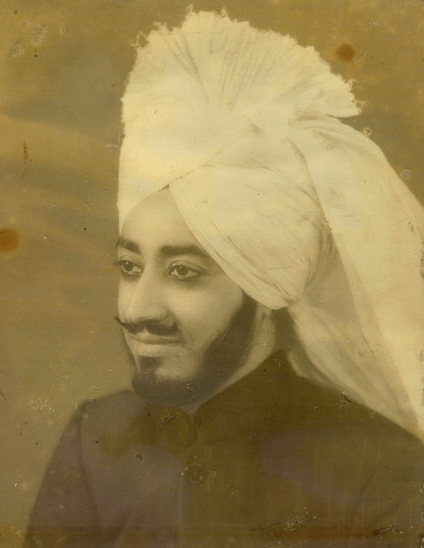
Tikka Atamjit Singh Sodhi, or Dadaji as we three sisters called him, had lived a life full of abundance and eminence. He came from an era of a very different India than we grew up in; before the nation became independent from British rule and divided into India and Pakistan. Growing up, I had only heard snippets of how life was for Dadaji and the Sodhi family ‘before the divide,’ and it was evident that so much had changed within the last three generations of our family that it was incomprehensible to articulate those distinctions.
But still, my earliest memories of Dadaji were full of quiet regality and repose. His indulgences were many, but above all, he loved to cook and eat good food. He never let go of an opportunity to hunt for an excellent next meal, and he was considered one of the best shooters and hunters in the region. A distinct practice in his hunting excursions was that he never aimed at an animal or bird without giving it a fair chance to escape from its predator.
Tikka Atamjit Singh Sodhi hailed from one of the chiefs and notable families of Punjab whose prominence and stature was well-documented in the historical legacy of the empire of Maharaja Ranjit Singh and later in the archival records of the British Raj. Tikka Atamjit Singh Sodhi was the direct descendent of Guru Ram Das (Sodhi), the fourth Sikh Guru from Guru Nanak Dev Ji (Bedi), the founder of the Sikh religion. Equally notable was the family he was married into, my paternal grandmother, Rani Jasjit Kaur was the great-granddaughter of Sir Baba Khem Singh Bedi, the direct descendent of Guru Nanak Dev Ji (Bedi) and a cultural, social, and educational leader in the undivided part of India now in Pakistan.
Such was the grandeur and legacy that Tikka Atamjit Singh Sodhi carried along and upheld like a true statesmen in those changing times. I was very young when he passed away but I will forever be grateful to have met him and known him for the life he lived, for he instilled in us three girls the abundance of not what you have but how well you live.



















 Ruby's Musings